
IP speakers connect directly to an Ethernet network for paging, announcements, notification and distributed audio. Instead of relying only on a traditional centralized amplifier and analog speaker wiring, an IP speaker can receive digital audio and control information over the network, often with centralized configuration and monitoring.
The right IP speaker depends on network architecture, power method, paging platform, audio coverage and environmental conditions. Compatibility with SIP, paging software, multicast or manufacturer-specific management platforms can matter as much as acoustic performance.
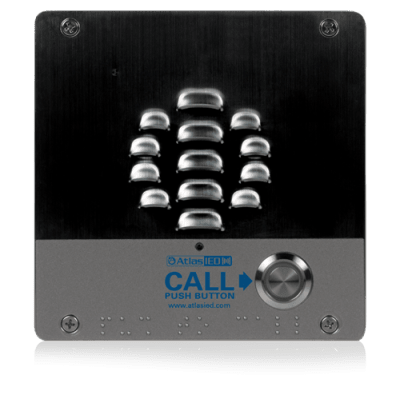





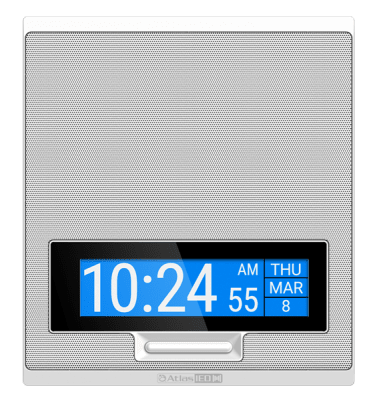

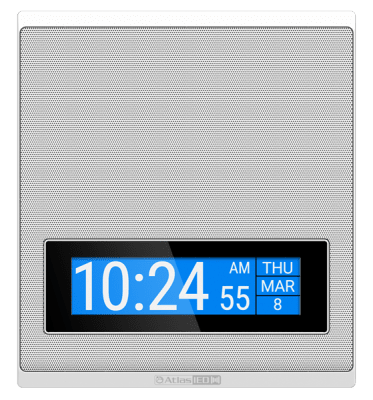


IP paging can be designed as a fully network-native system or integrated with existing analog paging. Endpoints may be addressed individually, assigned to zones or grouped dynamically. Network design determines how audio is transported, how devices are discovered and how announcements are prioritized. Coordinate with IT early, especially on VLANs, multicast, QoS and firewall rules.
Many IP speakers can receive both data and power over Ethernet, simplifying field wiring. Confirm the required PoE class or power budget and compare it with the available switch capacity. Higher-output devices may require more power than a basic PoE port can supply. When hundreds of endpoints are involved, total switch power budget becomes an important system design factor.
Some IP speakers register as SIP endpoints, while others use multicast streams or proprietary paging platforms. A device supporting one approach is not automatically compatible with every paging system. Verify the call-control or paging platform, codecs, provisioning method, zoning features and whether two-way communication is required.
Ceiling, wall, horn and surface-mount IP speakers address different coverage needs. Offices and classrooms often prioritize even, intelligible coverage, while warehouses and outdoor areas may need higher-output directional devices. Speaker placement should be based on ambient noise, mounting height and required intelligibility rather than simply replacing analog speakers one-for-one.
Where IP speakers support emergency communication, reliability and supervision become especially important. Consider network redundancy, backup power, monitoring and message priority. Life-safety applications may be subject to codes or system requirements beyond ordinary paging, so the complete design should be reviewed for the specific occupancy and jurisdiction.
Start with the paging platform and network, then determine endpoint style, coverage, power, environmental rating and management requirements. Confirm how the speaker is configured and monitored, whether firmware can be centrally managed and whether the system needs talkback, local inputs or relay outputs.
An IP speaker is more than an analog speaker with an Ethernet jack; it contains network electronics and typically an amplifier. PoE can reduce installation wiring but still requires adequate switch power. SIP support is useful for many systems, but platform compatibility should be verified rather than assumed.
Because IP speakers are network endpoints, ongoing maintenance can include firmware updates, credential management, network monitoring and configuration backups in addition to ordinary speaker inspection. Centralized health monitoring is valuable on large campuses because it can reveal an offline endpoint or network issue before an emergency page is needed.
Wallco can help compare specifications, compatibility and application requirements when you are selecting new components or replacing an existing part. Providing the manufacturer and model of the equipment you are connecting to, along with key electrical, mechanical and environmental requirements, helps narrow the correct choice.