
1/4-inch audio jacks provide durable receptacles for instruments, amplifiers, mixers, patch panels, test equipment and industrial controls. The correct jack must match the plug contact arrangement, switching requirements, mounting style, current level and physical panel or PCB layout.
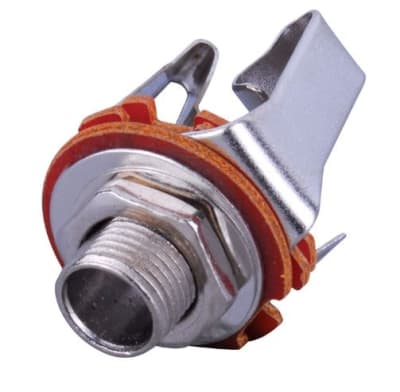
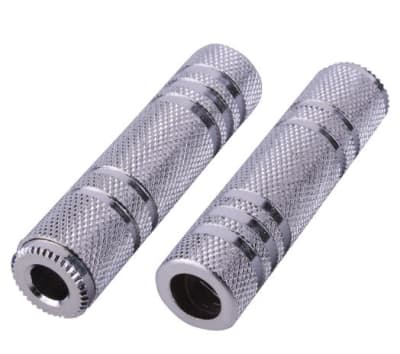


Traditional open-frame jacks expose the spring contacts and are common in amplifiers and patching equipment. Enclosed jacks protect contacts from dust and accidental bending and are widely used on PCBs. Threaded-bushing panel jacks provide strong chassis mounting. Each style has different space, serviceability and insulation characteristics.
TS jacks support two-conductor circuits; TRS versions add a ring contact. Many jacks also include shunt or normally closed contacts that change state when a plug is inserted. Those extra contacts can mute an internal speaker, normalize a patch bay or switch circuit paths. Replacing a switched jack with a simple non-switched version can break equipment functions even if audio still passes.
Metal-bushing jacks may bond the sleeve contact directly to a conductive panel, while plastic or insulated-bushing designs keep signal ground separate from chassis. This matters in audio grounding and in equipment where the chassis connection is controlled elsewhere. Preserve the original grounding arrangement during service.
A jack that no longer grips the plug can produce intermittent audio, crackling or channel loss. Open-frame jacks may allow careful inspection and tension adjustment, while sealed PCB jacks are usually replaced. Also inspect solder joints around board-mounted jacks because repeated insertion force can crack the connection even when the internal contact remains good.
Match panel-hole size or PCB footprint, terminal layout, contact count, switched-contact behavior, insulation method and bushing length. In amplifier and instrument service, note whether the jack is part of a switching circuit. Photos of both front and rear plus the equipment schematic are often more useful than the connector diameter alone.
For amplifier and patch-panel service, determine whether the jack normalizes or switches a signal when no plug is inserted. Those normally closed contacts can be central to the circuit. Also check whether the sleeve must be chassis-grounded or isolated and whether the nut, washer and bushing arrangement provides enough thread length through the panel thickness.
Use these receptacles for fixed female 1/4-inch connections. Cable-end male connectors belong under 1/4-Inch Audio Plugs & Connectors. A mechanical transition to 3.5mm generally belongs under Audio Plug & Jack Adapters. The distinction matters because replacing a worn jack restores the original connection, whereas adding an adapter only changes the interface at the cable end.
Mixers and patch bays may use jack contacts to create a default signal path until a plug is inserted. This normaling function can be half-normalled, fully normalled or equipment-specific. When servicing those systems, photograph and label every connection before removal because the additional contacts can make a simple-looking receptacle part of a larger routing scheme.
It is a normally closed contact that opens when a plug is inserted, often used for signal routing or speaker muting.
Potentially, if the circuit was designed for an isolated sleeve connection. Match the original grounding method.
Possible causes include worn jack contacts, cracked solder joints or a damaged cable plug. Inspect both sides of the connection.
Wallco can help narrow connector family, gender, contact count, termination, cable fit and application requirements. For replacements, provide the equipment manufacturer/model, clear photos of the mating face and side profile, and any dimensions or pinout information available.
