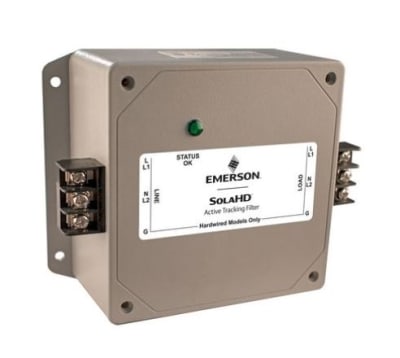
Surge Protective Devices
Shop surge protective devices designed to help limit transient overvoltage reaching industrial, commercial, control and communication equipment. Available products may include hardwired, DIN-rail, panel-mounted and data or signal-line surge protection.
Compare surge protective devices by system voltage, phase, installation location, nominal discharge current, surge-current capacity, protective modes and enclosure rating. The device must be selected and installed for the specific electrical system and application.
How to Select a Surge Protective Device
Surge protective devices help limit short-duration transient overvoltage caused by lightning activity, switching events and other electrical disturbances. They divert or restrict surge energy before it reaches connected equipment.
Surge protection should be coordinated with the electrical system and installation location. A device intended for a service entrance, distribution panel, control panel or signal circuit may have different construction, ratings and installation requirements.
Common SPD Applications
- Service and distribution protection: Helps protect electrical systems and downstream equipment at major distribution points.
- Control-panel protection: Protects PLCs, power supplies, relays, instrumentation and automation equipment.
- DIN-rail protection: Provides compact surge protection inside industrial control enclosures.
- Point-of-use protection: Adds protection near individual pieces of equipment.
- Data and signal-line protection: Addresses transient exposure on communication, instrumentation and low-voltage signal circuits.
Important Selection Factors
- System voltage: Match the SPD to the nominal electrical-system voltage.
- System configuration: Verify phase, wiring arrangement and grounding configuration.
- Installation location: Determine whether the device is used at the service, distribution panel, branch panel, control panel or point of use.
- Maximum continuous operating voltage: Confirm compatibility with normal system voltage conditions.
- Surge-current rating: Review the manufacturer’s ratings for the intended exposure and application.
- Protective modes: Verify protection between the required conductors and ground.
- Connection method: Choose hardwired, DIN-rail, plug-in or signal-line installation as required.
- Status indication: Determine whether visual indicators, alarm contacts or remote monitoring are needed.
- Enclosure rating: Confirm suitability for indoor, outdoor, dusty or wet environments.
Replacement Checklist
- Manufacturer and complete SPD part number
- Nominal system voltage
- Phase and wiring configuration
- Installation location within the electrical system
- Required surge-current and voltage-protection ratings
- Mounting and connection method
- Enclosure and environmental requirements
- Required alarm contacts or status-monitoring features
Need help identifying a surge protective device? Email
[email protected] with the manufacturer and existing part number, system voltage, phase, wiring configuration, installation location and clear photographs of the existing device and nameplate.