
Surveillance power supplies provide regulated power to cameras and related security devices, either from individual adapters or centralized multi-output enclosures. Correct power design improves reliability and simplifies service, while undersized supplies, excessive voltage drop or incorrect grounding can cause intermittent cameras, IR cycling and premature equipment failure.
Match output voltage exactly, then total the camera current requirements under worst-case conditions such as IR illumination, heaters or startup. Verify output count, per-channel protection, total capacity, enclosure type, input voltage and required certifications.


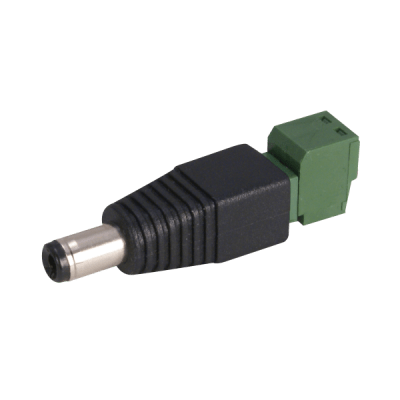


Many cameras use 12 VDC, 24 VAC or dual-voltage inputs. Supplying the wrong voltage can damage equipment. With DC cameras, polarity also matters. Use the camera nameplate or datasheet rather than assuming voltage from connector style.
Multi-output supplies concentrate camera power in one serviceable location and may provide individual fuses or resettable protection. This can simplify troubleshooting because a single camera fault does not need to disable the entire system.
Add the maximum current of all connected cameras and accessories, then provide reasonable operating margin. IR LEDs, heaters and motorized functions can raise demand above daytime steady-state consumption. Use worst-case specifications when available.
Long low-voltage cable runs can reduce voltage at the camera. The effect increases with current and conductor resistance. A camera may work during the day but fail at night when IR turns on if the supply and conductor size leave insufficient voltage margin.
Camera systems can span buildings, poles and outdoor areas where ground potential and lightning-induced transients are concerns. Follow manufacturer grounding instructions and consider coordinated surge protection on power and signal paths where exposure is significant.
IP cameras often use PoE instead of a separate camera power supply. Compare approaches based on network architecture, distance, UPS backup and serviceability. PoE still requires a correctly sized switch or injector power budget.
Centralized supplies make it easy to place camera power on one UPS and provide a single service point. Local adapters reduce voltage-drop concerns but create many distributed power sources that may be difficult to back up or reset. The best approach depends on cable distance, building layout, service access and whether cameras must remain online during utility outages.
Symptoms such as repeated camera reboots, IR switching instability or nighttime image loss often point to marginal voltage rather than a video problem. Measure voltage at the camera under the highest expected load, not just at the power supply with the camera disconnected. Inspect corroded connectors and undersized conductors before increasing supply voltage beyond the camera specification.
For a replacement or new installation, send Wallco the equipment model, system type, electrical or network requirements, installation environment and any compatibility constraints. The more application detail provided, the easier it is to narrow the correct product family and avoid a physically similar but incompatible part.
