

SE Relays, now supported within Schneider Electric's industrial automation portfolio, includes electromechanical, power, timing, solid-state and control/monitoring relays along with sockets and mounting accessories for industrial control applications.
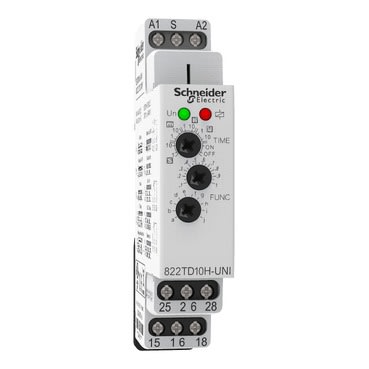
The product families serve different control requirements. General-purpose plug-in relays are used for logic and interface switching and are commonly paired with sockets and accessories. Power relays use heavier-duty contacts and magnetic structures for higher-current loads. Timer relays add functions such as on-delay, off-delay and multifunction timing. Solid-state relays eliminate moving contacts for silent operation, high cycle rates and long switching life. Control and monitoring relays supervise conditions such as phase, current, voltage, frequency, speed, level, pump operation and temperature.
SE Relays includes established series used in industrial panels and equipment. Schneider Electric highlights the 792 Series as a general-purpose plug-in relay family, the 9A Series as sealed power relays for motor and ballast loads, the 820 Series as multifunction time-delay relays, and the 861 Series as slim solid-state relays with an internal heat sink for DIN-rail or panel mounting.
Relay selection should be based on coil voltage, contact form, contact current and voltage rating, load type, switching frequency, mounting method, socket compatibility and any required timing, monitoring or indication functions. For replacement work, the complete part number and socket/interface should be checked because relays with similar contact arrangements can differ in coil voltage, pinout, enclosure, duty rating and approvals.




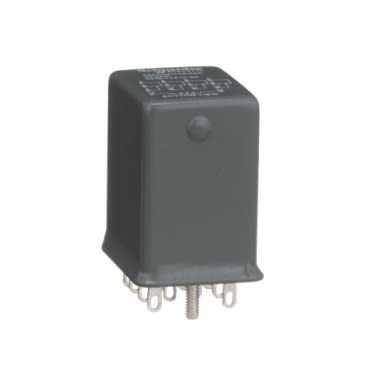

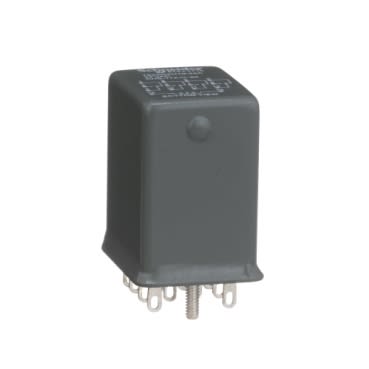
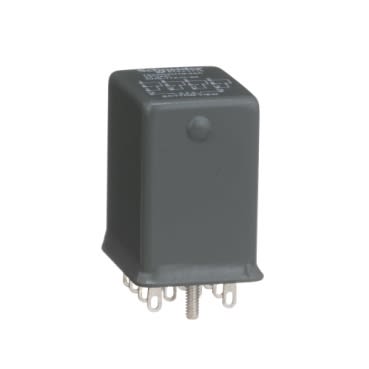
Begin with the coil and contact requirements. Match the control voltage to the relay coil, then verify the contact form - such as SPDT, DPDT or multi-pole configurations - and confirm that the contact rating is appropriate for the actual load. Resistive, motor, ballast, inductive and DC loads can impose very different switching demands even when their nominal current is similar.
For plug-in relays, the relay and socket must be treated as a matched system. Verify pin count, terminal arrangement, current rating, mounting style and accessory compatibility. DIN-rail adapters, retaining clips, sockets and other accessories should be checked against the exact relay series rather than selected only by physical appearance.
Power relays are appropriate where contact capacity is the primary requirement. Timer relays are selected by timing function, supply voltage and timing range. Solid-state relays are often preferred for high-frequency switching, silent operation and applications where eliminating mechanical contact wear is important. Monitoring relays are selected by the abnormal condition that must be detected and the required output behavior.
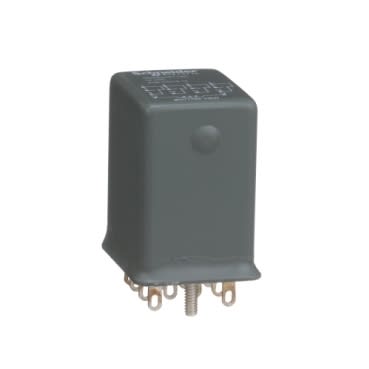
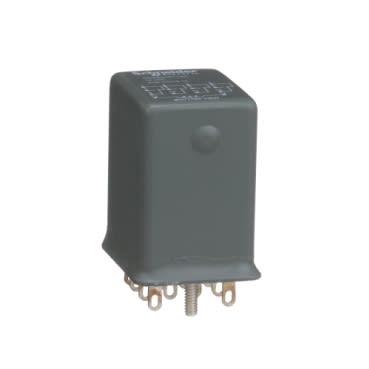
The 792 Series is a general-purpose plug-in relay family used in automation panels, control systems and conveyor control. Schneider Electric identifies standard versions in the 6-12 A range, with lower-level versions available for smaller signal loads, plus multiple mounting and accessory options.
A power relay is intended for applications requiring heavier-duty contacts and higher load capability. The 9A Series, for example, is a sealed power relay family Schneider Electric specifies at 30 A/2 HP for motor, ballast and other higher-power switching applications.
Solid-state relays are useful where high switching cycles, silent operation and the absence of moving contacts are advantages. Thermal management and load characteristics still matter: verify the relay's output type, current rating, control input and heat-dissipation requirements for the application.