
Cable tracers and circuit identifiers help technicians determine where a conductor goes without opening every junction box or disconnecting every circuit. Depending on the system, a transmitter places a signal on the conductor and a receiver detects that signal through insulation, walls, panels or bundles.
Tools range from tone-generator-and-probe kits for communications wiring to energized/de-energized electrical circuit tracers capable of identifying breakers and following branch circuits. Voltage rating and intended circuit type are critical selection factors.
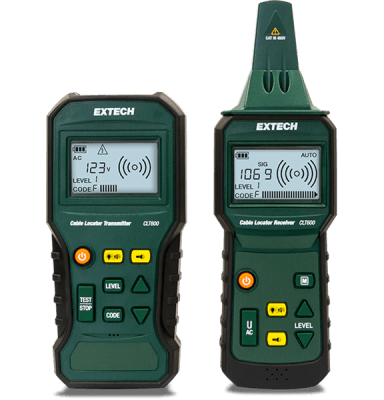
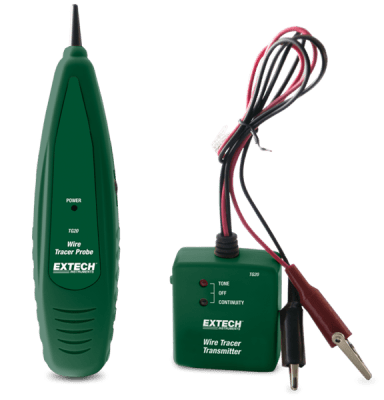


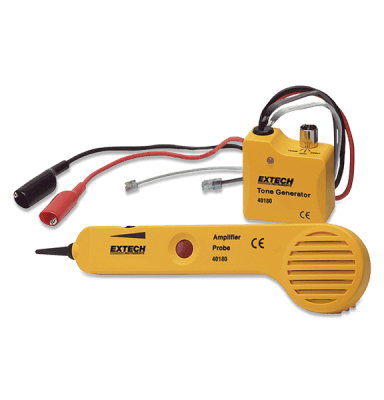
Tone generators are commonly used on telephone, data, alarm and other low-voltage cabling. They inject an audible-frequency signal that can be detected with an inductive probe. Electrical circuit tracers are designed for branch circuits and may operate on energized conductors, de-energized conductors or both, depending on the model.
Never connect a low-voltage toner to mains voltage unless the manufacturer explicitly rates it for that use. The transmitter input rating and connection method must match the circuit.
Breaker finders and advanced circuit tracers can associate a receptacle or conductor with the breaker feeding it. Better systems use transmitter coding and receiver sensitivity control to reduce false indications from adjacent breakers. In crowded panels, follow the instrument procedure carefully and make multiple passes if recommended.
A tracer indicates the likely circuit path but does not replace proper verification before work. Always confirm absence of voltage with an appropriate tester before touching conductors.
Signal strength depends on cable construction, depth, shielding, parallel conductors and grounding. Shielded cable can attenuate the tracer signal, and multiple conductors running together can allow signal coupling onto neighboring wires. Adjustable receiver sensitivity helps narrow the path as the technician approaches the target.
For de-energized tracing, some systems allow connection between conductor and ground to improve signal propagation. Follow the specific instrument method because connection strategies vary.
Look for adjustable sensitivity, audible and visual indication, multiple transmitter modes, non-contact voltage awareness, remote identifiers, continuity testing and accessories suited to the wiring type. For commercial electrical work, CAT safety rating and maximum voltage are more important than convenience features.
Use cases include identifying unknown breakers, tracing circuits during renovations, locating open wiring routes, distinguishing cables in trays or bundles, mapping telecom pairs and verifying which conductor reaches a remote outlet or device. Good labeling after tracing prevents the same diagnostic work from being repeated later.
For a faster and more accurate selection, confirm the following application details before comparing part numbers:
Tone-and-probe kits are generally intended for communications and low-voltage cable, while circuit tracers are built for branch circuits and breaker identification. Choosing the wrong type can be ineffective and, more importantly, unsafe.
Only with a tracer specifically rated and designed for energized mains circuits.
Capacitive or inductive coupling can transfer the tracer signal to adjacent conductors; reduce sensitivity and follow the manufacturer tracing method.
No. Verify de-energization separately before electrical work.