
Sealed lead acid batteries—often described as SLA or VRLA batteries—are rechargeable lead-acid batteries designed with regulated internal pressure and minimal routine electrolyte maintenance. They are widely used in UPS systems, alarm panels, emergency lighting, telecommunications, mobility equipment and many other standby or cyclic applications.
Choosing an SLA battery requires matching more than nominal voltage and amp-hour capacity. Terminal type, physical dimensions, discharge rate, charging profile, expected service life, operating temperature and whether the duty is standby, high-rate or deep-cycle all influence performance and replacement suitability.


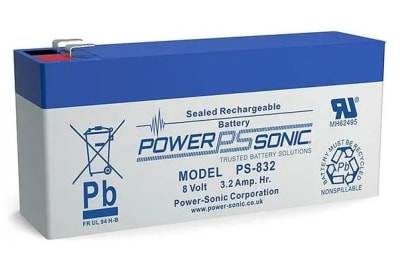
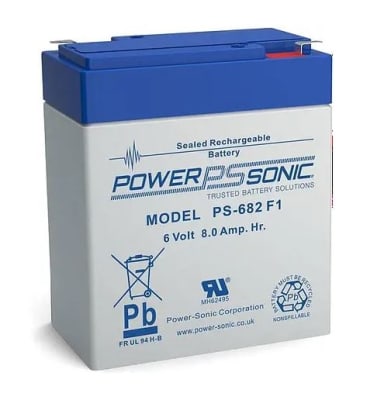

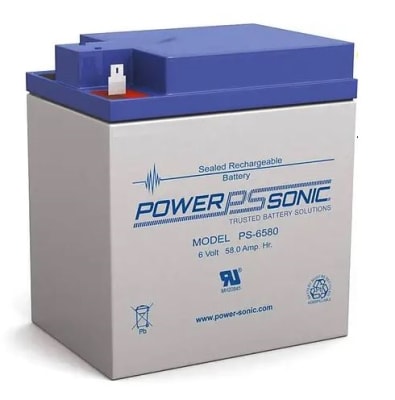

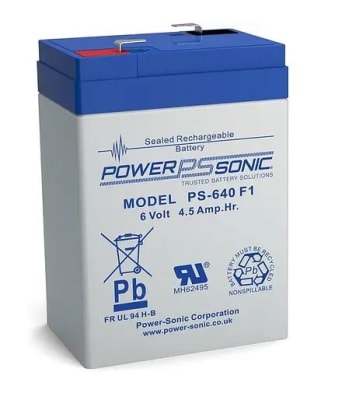
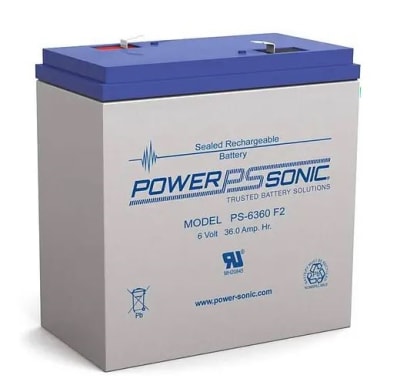
VRLA means valve-regulated lead-acid and describes the sealed, pressure-regulated construction. AGM—absorbed glass mat—is a common VRLA design in which electrolyte is held in fiberglass separators. In everyday product listings, SLA, VRLA and AGM terms may overlap, but application-specific designs still differ in plate construction, discharge performance and intended cycle life.
Match nominal voltage first, then compare amp-hour capacity at the stated discharge conditions. A battery with the same voltage and similar capacity may still be unsuitable if it does not fit the enclosure or uses different terminals. Measure case dimensions and verify terminal style, orientation and polarity before substituting a replacement.
General-purpose standby batteries are common in alarms and emergency systems. High-rate batteries are optimized to deliver large currents over relatively short periods, which is important in UPS applications. Deep-cycle AGM products are designed for repeated discharge and recharge. Using a standby battery in a demanding cyclic application can shorten service life even when the nameplate capacity appears correct.
Battery capacity is not a fixed runtime number. Available capacity changes with discharge rate, temperature and battery condition. UPS and inverter loads can draw much higher current than a low-rate capacity test. For runtime-critical applications, use manufacturer discharge tables for the exact battery rather than calculating runtime from amp-hours alone.
VRLA batteries require appropriate constant-voltage charging and temperature considerations. Overcharging accelerates corrosion and dry-out, while chronic undercharging can lead to sulfation and reduced capacity. In standby systems, the charger maintains the battery on float for long periods, making charger accuracy and ambient temperature important to service life.
Multiple batteries may be connected in series to increase voltage or in parallel to increase capacity. Replacement batteries in a series string should generally be matched in model, age and condition. Mixing a new battery with significantly aged batteries can create imbalance and poor string performance.
For replacement work, start with the original battery model or equipment specification. Confirm voltage, capacity, dimensions, terminals, chemistry, discharge requirement and charger compatibility. For new designs, identify whether the battery will spend most of its life on standby or cycle regularly, and size it using realistic load and runtime requirements.
“Maintenance-free†does not mean a battery has unlimited life. Heat is a major life-reduction factor for lead-acid batteries. A physically compatible battery can still be the wrong choice if its discharge or cycle characteristics differ from the original. Batteries connected in strings should be treated as a matched system.
Wallco can help compare specifications, compatibility and application requirements when you are selecting new components or replacing an existing part. Providing the manufacturer and model of the equipment you are connecting to, along with key electrical, mechanical and environmental requirements, helps narrow the correct choice.