
ACME Electric, a Hubbell brand, manufactures dry-type transformers and power-conversion products for industrial, commercial and OEM electrical systems. The broader ACME portfolio includes buck-boost, drive-isolation, industrial-control, distribution, non-linear-load, medium-voltage and specialty transformer families.
Wallco listings currently include a large range of ACME industrial control transformers along with ACME buck-boost and drive-isolation models. Each family solves a different electrical problem: industrial control transformers supply machine-control circuits, buck-boost transformers correct consistently high or low line voltage, and drive-isolation transformers are designed around the electrical demands of AC and DC motor-drive systems.
Selecting an ACME transformer requires more than matching kVA. Confirm phase, frequency, primary and secondary voltage, load kVA or VA, winding configuration, taps, enclosure, temperature rise, impedance, installation environment and any application-specific requirements such as motor-drive duty or control-circuit inrush.
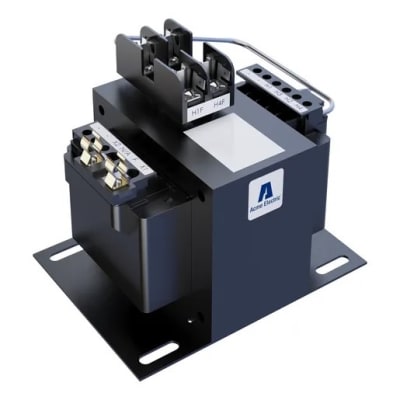
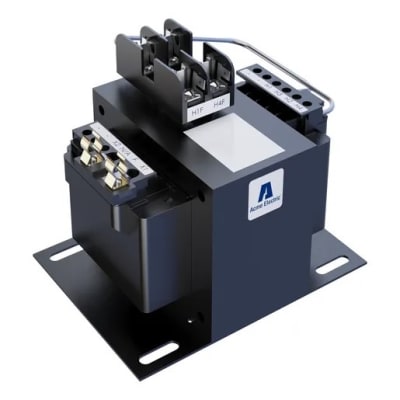
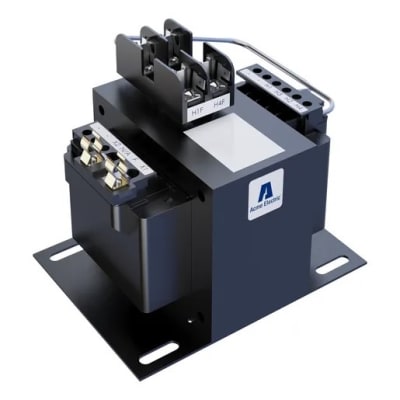
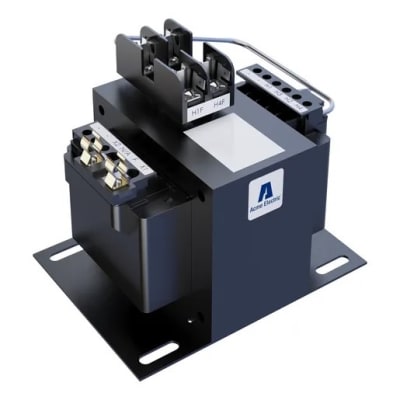
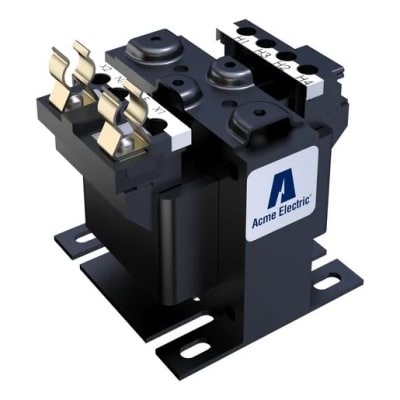
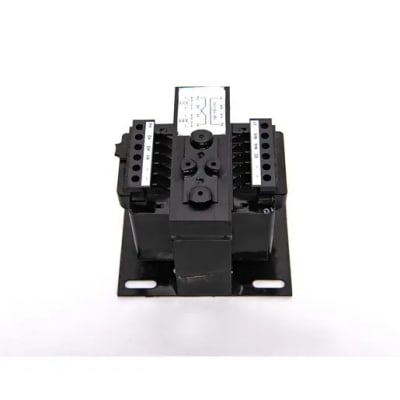
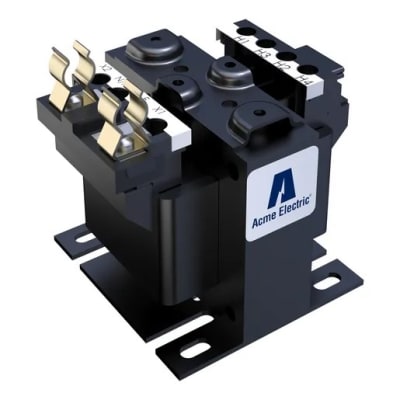
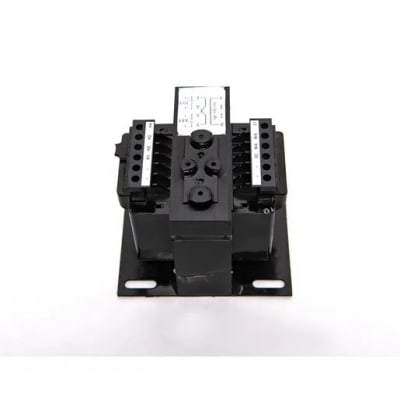
Begin with the source and load: identify phase, frequency, available primary voltage, required secondary voltage and the continuous VA or kVA of the connected equipment. Transformer kVA should then be checked against the actual application rather than selected from voltage alone.
For buck-boost applications, determine both the existing line voltage and the desired equipment voltage. ACME buck-boost units can be connected as autotransformers to raise or lower voltage, but they do not regulate a changing input voltage; the output changes with the input. Three-phase buck-boost installations may require multiple single-phase units depending on the source configuration.
For motor drives, use a drive-isolation transformer sized for the drive application. ACME notes that drive-generated harmonics add transformer loading and that the transformer should be at least the kVA recommended by the drive manufacturer. Drive-isolation units are designed specifically for AC adjustable-frequency and DC drive service.
For machine-control circuits, account for both sealed VA and inrush VA. Contactors, relays, starters and solenoids can draw several times their steady-state current during pickup, so an industrial control transformer is commonly selected from the connected control load and the worst-case simultaneous inrush.
Also verify enclosure type, available taps, mounting, conductor space, ambient conditions and applicable code requirements before ordering.
Buck-boost transformers are used to correct a consistently high or low supply voltage. A common example is boosting a 208 V source to approximately 230 or 240 V for equipment designed around the higher voltage.
No. A buck-boost transformer changes the voltage by its designed ratio, but if the input voltage varies the output will vary by the same percentage.
Drive-isolation transformers provide isolation from the service line and are designed for the electrical duty associated with AC and DC motor drives, including the effects of drive harmonics and switching.
Sizing should account for the steady control load plus the inrush VA of devices such as contactors, relays, starters and solenoids that may energize at the same time.
A standard transformer is not a phase converter and cannot take a three-phase source and produce a balanced single-phase load on the three-phase supply by itself.
