
Shop copper Ethernet patch cords for connecting network equipment, patch panels, wall outlets and other structured-cabling components. Wallco offers patch-cord options for common Ethernet cabling categories and network installations.
Compare patch cords by cable category, shielding, length, connector configuration and application. Selecting a patch cord that matches the installed structured-cabling system helps maintain the intended performance of the network channel.
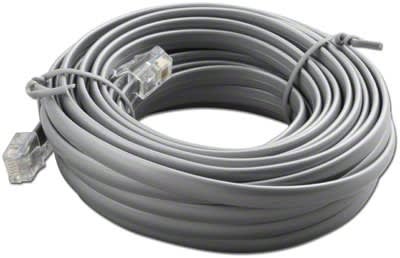

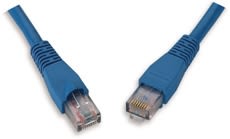


Copper patch cords provide the flexible connections between network equipment and the permanent cabling installed throughout a structured-cabling system. They are commonly used to connect switches to patch panels, computers and other network devices to wall outlets, and network hardware within racks and telecommunications spaces.
Although patch cords may appear similar, cable category, shielding, conductor construction, connector design and length can affect how appropriate a cord is for a particular network installation. Selecting patch cords that match the performance requirements of the installed cabling system helps maintain the intended capability of the complete network channel.
Copper Ethernet patch cords may be available in several structured-cabling performance categories. The appropriate category depends on the cabling system and network application.
When replacing an existing patch cord, matching the category of the installed cabling system is generally the most straightforward starting point.
The cable category is important, but it is not the only factor to consider. Patch cords should be selected according to the complete network connection and the environment in which they will be installed.
Many structured-cabling systems use unshielded twisted-pair copper cabling, while others use screened or shielded construction. The patch cord should be selected with the complete cabling channel in mind.
A shielded patch cord does not automatically convert an otherwise unshielded system into a shielded network channel. Likewise, using an inappropriate patch cord within a shielded infrastructure can interfere with the intended system design. When working with screened or shielded cabling, verify the requirements of the installed jacks, patch panels, grounding approach and connected equipment.
Choosing the correct patch-cord length helps maintain an organized installation. A cord should be long enough to route properly between connection points without strain, but excessive length can create unnecessary cable bundles and make racks or work areas more difficult to manage.
In equipment racks and telecommunications spaces, shorter cords may be useful for connections between nearby patch panels and switches. Longer cords may be needed for workstation or equipment connections where network outlets and devices are farther apart.
Before ordering, consider the actual routing path rather than only the straight-line distance between connection points.
Copper patch cords are used at several points within a structured-cabling installation. In a telecommunications room, they commonly connect patch-panel ports to Ethernet switches or other network equipment. At the work area, patch cords connect computers, phones, access points and other Ethernet devices to network outlets.
Because these cords form part of the complete cabling channel, their performance category should be appropriate for the permanent cabling and connecting hardware already installed.
Some network installations operate in environments where standard commercial patch-cord construction may not be appropriate. Industrial applications may involve specialized connectors, mounting arrangements or cable constructions designed for equipment and network infrastructure used outside conventional office environments.
When replacing an industrial network cable assembly, verify the connector configuration, cabling category and equipment interface carefully rather than assuming that a standard RJ45 patch cord is interchangeable.
Copper Ethernet patch cords may be used for applications including:
For best results, consider the patch cord as one component of the complete network channel. Permanent horizontal cabling, patch panels, jacks, patch cords and network equipment all contribute to the finished installation.
When replacing an existing cord, check its cable category, shielding, connector configuration and length. If you are building or expanding a structured-cabling system, verify the requirements of the entire installation before selecting individual patch cords.
