
Shop fiber optic adapters and couplers for connecting compatible fiber cables, patch cords, panels and enclosures. Wallco offers optical connectivity components for network, telecommunications, commercial and industrial fiber installations.
Compare fiber adapters by connector type, fiber mode, port configuration and mounting format. Select components that match the connector interfaces and optical requirements of the fiber system being installed or maintained.


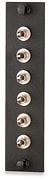
Fiber optic adapters and couplers provide the interface that allows compatible fiber connectors to be joined within patch panels, enclosures, wall outlets and other optical network hardware. These passive components are an important part of the complete fiber link because they create the connection point between patch cords, pigtails and permanent fiber infrastructure.
Fiber adapters are available in multiple connector styles, mounting configurations and fiber-system designs. The correct adapter should match the connectors being joined as well as the optical requirements of the network.
The physical connector format is one of the most visible selection factors, but additional details should be reviewed before choosing fiber connectivity components.
Single-mode and multimode fiber systems use different optical transmission characteristics. Fiber adapters are passive components, but they should still be selected as part of a compatible fiber system rather than solely by their physical connector shape.
When servicing an existing network, identify the fiber mode used by the installed cabling, patch cords and optical transceivers. This helps ensure that replacement adapters and related fiber components remain consistent with the original system design.
Color coding may sometimes help identify common fiber configurations, but color alone should not be used as the only compatibility check. Verify the product specifications and the installed fiber system before ordering.
Many fiber patch panels and enclosures use removable adapter plates or modular inserts. These components allow the enclosure to be populated with the connector type and port count required for a particular project.
A configurable panel can be useful when the same enclosure platform must support multiple connector formats or when a network needs to expand over time. However, adapter plates are often designed for particular enclosure or panel families, so mechanical compatibility should be verified before mixing components.
When planning a new fiber panel, consider the enclosure, adapter plates, individual adapters, patch cords and internal fiber-management hardware together.
One of the most common uses for fiber adapters is joining patch cords to permanent fiber connections at a patch panel. A connector on each side of the adapter aligns the optical fibers so light can pass through the connection.
The patch cord and adapter must use compatible connector formats. The patch cord should also match the fiber mode and optical equipment used throughout the rest of the link.
When replacing a patch cord or adapter, inspect both sides of the connection rather than assuming that every port within the enclosure uses the same connector configuration.
Clean fiber interfaces are important for reliable optical connections. Dust, contamination or debris on connector end faces can interfere with signal transmission even when the cable, adapter and network equipment are otherwise compatible.
Fiber connectors and adapters should be handled carefully, and appropriate fiber-cleaning practices should be used when installing or servicing optical connections. Protective caps should remain in place when unused components are being stored or awaiting installation.
Do not use general-purpose cleaning methods that may leave residue or damage the fiber interface. Use cleaning products and procedures intended for fiber optic connectivity.
Fiber optic adapters and couplers may be used in applications including:
Before ordering a fiber adapter or coupler, verify the connector type, fiber mode, port configuration and mounting requirements. If the component will be installed in an existing panel or enclosure, confirm that its physical format is compatible with that hardware.
For a complete fiber link, also review the patch cords, permanent cabling, connectors and optical equipment at both ends. A compatible connection depends on the complete system rather than the adapter alone.
