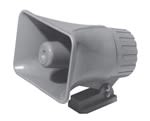
Subwoofers reproduce the lowest part of the audio spectrum, adding impact and extension that small main speakers cannot produce efficiently. They are used in home theater, music systems, hospitality, houses of worship, presentation spaces and commercial installations where full-range sound is desired.
Selection should consider room size, maximum output, low-frequency extension, amplifier arrangement, enclosure type, crossover options, placement and integration with the main speakers. A larger driver can help, but driver diameter alone does not determine performance.


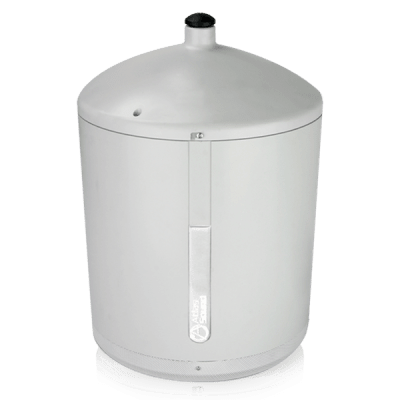
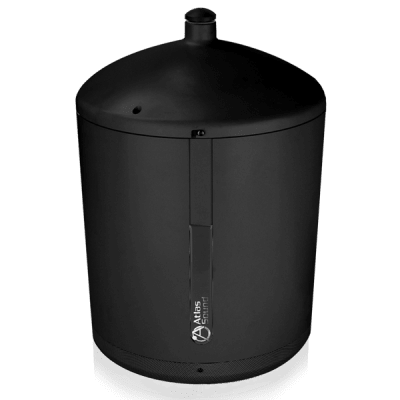
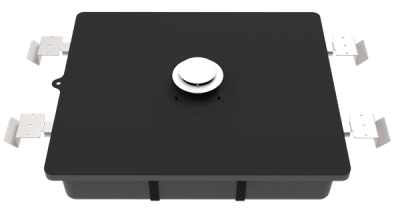


Powered subwoofers include a dedicated amplifier and usually provide line-level inputs, crossover controls, phase adjustment and level control. Passive subwoofers require an external amplifier and often a system processor or crossover. Installed commercial systems may favor passive designs for centralized amplification.
Match the subwoofer architecture to the rest of the audio system before comparing output specifications.
Low-frequency extension describes how deep the system can play, while maximum output describes how loud it can play at those frequencies. A subwoofer that reaches very low frequencies at modest level may not be suitable for a large room requiring high output.
Compare specifications using similar measurement conditions when possible. Marketing bandwidth numbers without tolerance or output level can be misleading.
Low frequencies interact strongly with room boundaries and dimensions. Corner placement often increases output but can exaggerate certain room modes. Moving the subwoofer even a few feet can change bass uniformity substantially. Multiple subwoofers can improve seat-to-seat consistency when placed and calibrated correctly.
For installed systems, coordinate location with structural support, ventilation, wiring and service access.
The crossover divides bass responsibilities between subwoofer and main speakers. A suitable crossover frequency depends on the main speaker capability and system design. Phase or delay adjustment helps align arrivals through the crossover region and can prevent cancellation.
Automatic room correction can help, but good placement and basic system setup should come first.
Restaurants, retail, fitness spaces and hospitality systems may use subwoofers to add low-frequency support without increasing the size of every ceiling or surface speaker. Commercial systems may require 70/100 V compatibility, weather resistance, suspension hardware or specific fire/building considerations.
For a faster and more accurate selection, confirm the following application details before comparing part numbers:
A subwoofer supplements main speakers rather than replacing them. It is optimized for low frequencies and normally relies on a crossover or processor to divide the audio spectrum appropriately.
No. Enclosure design, amplifier power, excursion and tuning are equally important.
Placement depends on the room; corners increase output, while experimentation or measurement helps achieve smoother response.
Choose a point that overlaps appropriately with the main speaker capability; system manufacturer recommendations are a good starting point.