• QUESTIONS? GIVE US A CALL! 1 (570) 823-6181

  • QUESTIONS? GIVE US A CALL! 1 (570) 823-6181

You are here: Home > Product Categories > Power Conversion & Protection > Power Conditioners

Power Conditioners

Power Conditioners

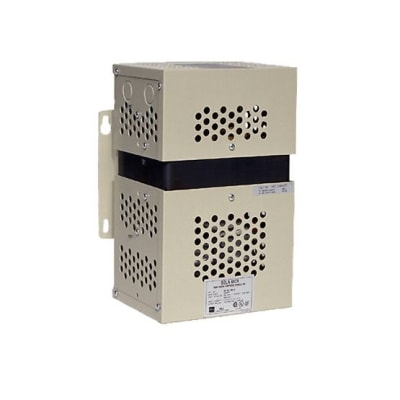
Shop power conditioners designed to improve the quality and stability of electrical power supplied to sensitive industrial, commercial and electronic equipment. Depending on the design, a power conditioner may provide voltage regulation, electrical isolation, noise attenuation and protection against selected power-line disturbances.

Compare power conditioners by input and output voltage, phase, VA or kVA capacity, regulation range, mounting style and enclosure. Identify the specific power-quality problem and connected load before selecting a conditioner.

How to Select a Power Conditioner

Power conditioners are used when connected equipment requires cleaner or more stable input power than the normal electrical source provides. Depending on the product design, a conditioner may regulate voltage, provide isolation, attenuate electrical noise or help reduce the effects of selected transient disturbances.

A power conditioner does not automatically solve every power-quality problem. Before selecting a unit, determine whether the application is experiencing sustained low or high voltage, short-duration sags, electrical noise, transients, grounding issues or complete power interruptions.

Power Conditioner vs. UPS

A power conditioner improves or regulates incoming power but normally does not provide extended battery-backed operation during a complete outage. A UPS includes stored energy to support the connected load temporarily. Some UPS designs also include power-conditioning functions, but the two product types should not be treated as interchangeable.

Important Selection Factors

  • Power-quality problem: Identify voltage variation, electrical noise, isolation or transient-protection requirements.
  • Input voltage: Match the available supply and expected operating range.
  • Output voltage: Confirm the voltage required by the connected equipment.
  • Load capacity: Size the conditioner for the continuous VA or kVA demand.
  • Inrush current: Account for startup demand from transformers, motors and power supplies.
  • Phase: Select single-phase or three-phase equipment as required.
  • Regulation range: Verify the allowable input variation and expected regulated output.
  • Isolation: Determine whether galvanic isolation is required.
  • Installation: Review hardwired, portable, rack, wall or floor-mount requirements.

Replacement Checklist

  • Manufacturer and complete model number
  • Input and output voltage
  • Single-phase or three-phase supply
  • Connected load in VA, kVA or watts
  • Power-quality symptoms being addressed
  • Required regulation and isolation functions
  • Mounting and enclosure requirements
  • Photographs of the existing nameplate and wiring diagram
Need help selecting a power conditioner?
Email [email protected] with the manufacturer and existing model, input and output voltage, connected load, phase and the power-quality symptoms being addressed.
Empty Cart