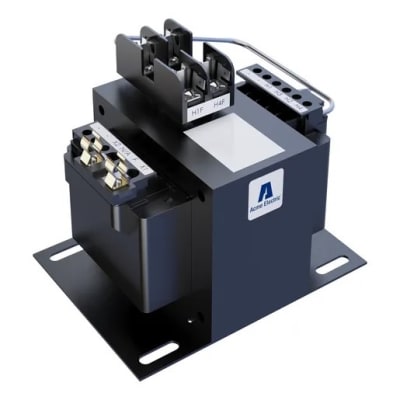
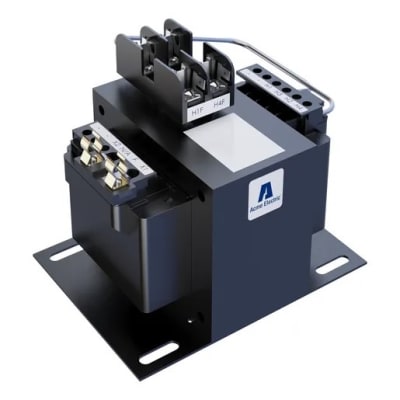
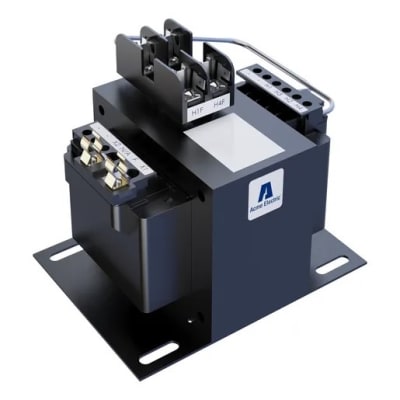
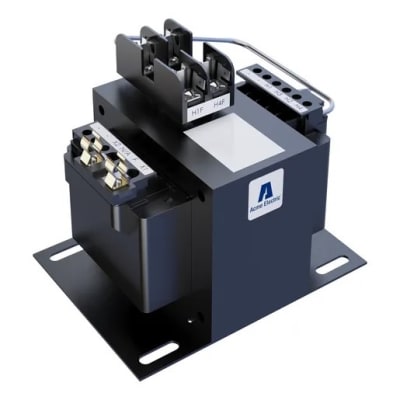
Transformers
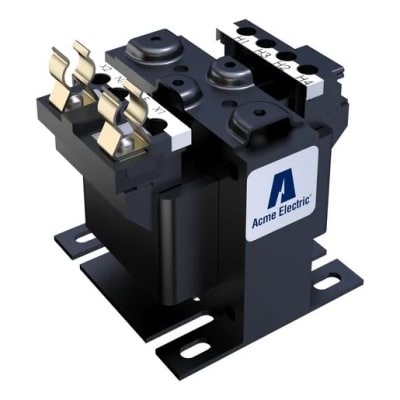
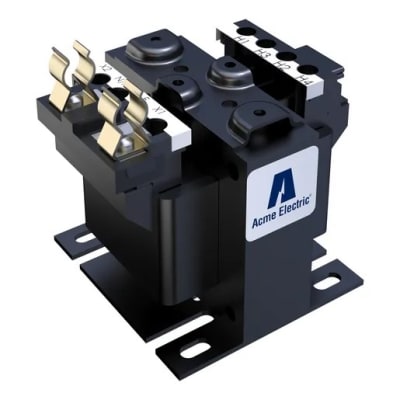
Shop electrical transformers used to change voltage levels, provide circuit isolation and supply power to industrial, commercial and control-system loads. Available product families include industrial control, general-purpose, buck-boost, drive isolation and other application-specific transformers.
Compare transformers by primary and secondary voltage, phase, frequency, VA or kVA rating, enclosure, winding material, temperature rise and application. Verify both the continuous load and any temporary inrush or starting-current requirements.
How to Select an Electrical Transformer
Transformers transfer electrical energy between windings through electromagnetic induction. Depending on the design, a transformer can step voltage up or down, provide electrical isolation, supply control circuits or adapt incoming power for a particular piece of equipment.
Transformer selection requires more than matching two voltage values. The transformer must also be sized for the connected load, phase, frequency, operating environment and any temporary current demand created when contactors, motors, solenoids or other loads are energized.
Common Transformer Types
- Industrial control transformers: Supply lower-voltage control circuits and are designed to support temporary inrush from electromagnetic devices.
- General-purpose transformers: Provide voltage conversion for a broad range of commercial and industrial loads.
- Buck-boost transformers: Make relatively small adjustments to an existing supply voltage.
- Drive isolation transformers: Supply and isolate motor-drive applications with electrical characteristics suited to drive loads.
- Application-specific transformers: Address requirements such as harmonic loads, hazardous locations or reduced temperature rise.
Important Selection Factors
- Primary voltage: Match the available supply and required winding connection.
- Secondary voltage: Confirm the voltage required by the connected load.
- Phase: Select a single-phase or three-phase transformer as required.
- Power rating: Size the transformer in VA or kVA for the connected load and application.
- Frequency: Verify compatibility with the supply frequency.
- Inrush requirements: Account for temporary current demanded by contactors, relays, solenoids and motors.
- Enclosure: Confirm indoor, outdoor, ventilated, encapsulated or hazardous-location requirements.
- Winding and temperature rise: Review efficiency, winding material and thermal requirements where relevant.
Replacement Checklist
- Manufacturer and complete transformer part number
- Primary and secondary voltage
- Single-phase or three-phase supply
- VA or kVA rating
- Frequency and winding connections
- Enclosure and mounting requirements
- Connected load and starting or inrush requirements
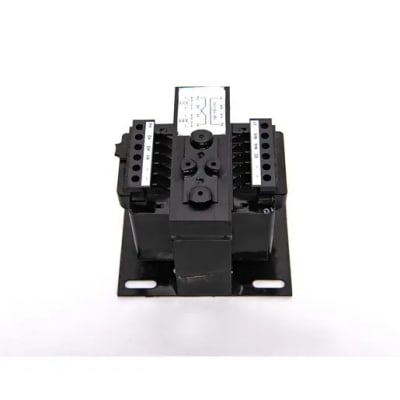
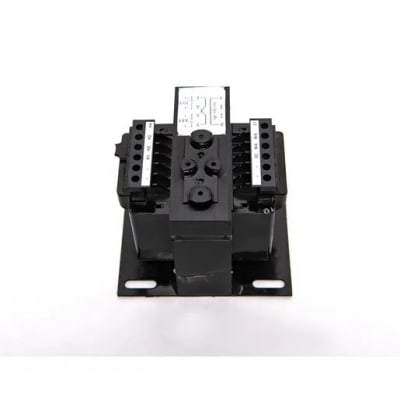
- Photographs of the nameplate and terminal diagram
Need help identifying a transformer or replacement? Email
[email protected] with the manufacturer, complete part number, nameplate photographs, input voltage, required output voltage, phase and connected-load information.