
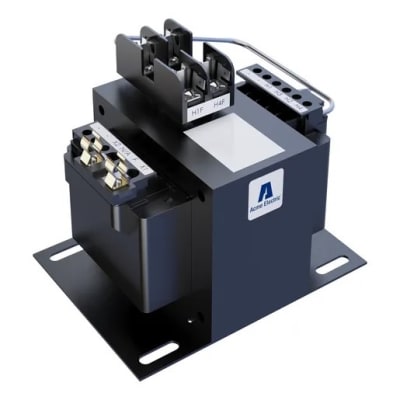
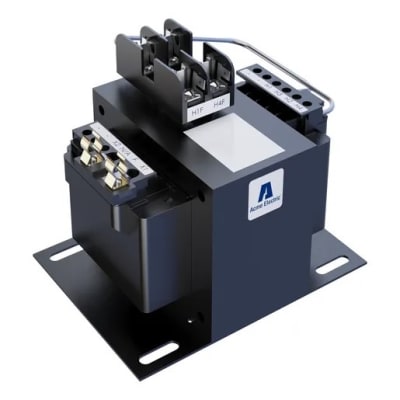
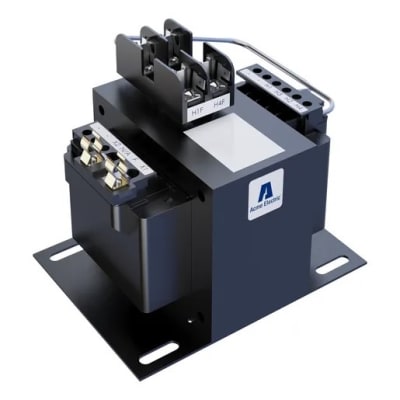
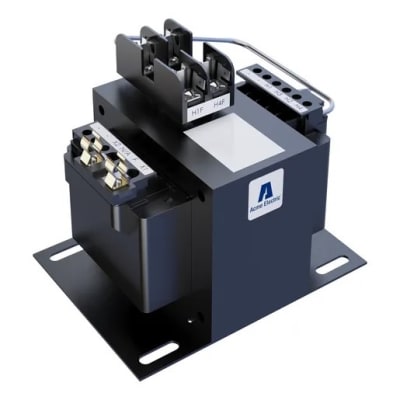
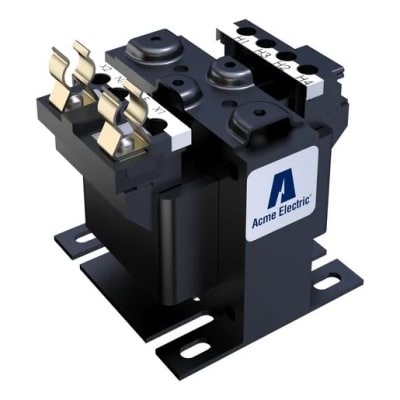
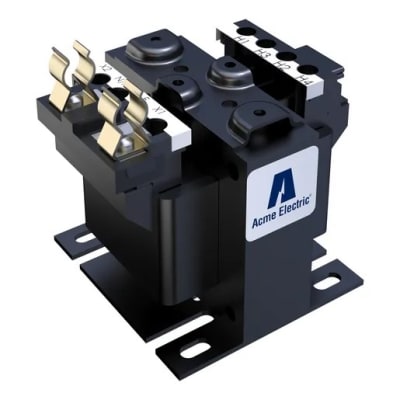
ACME industrial control transformers provide stepped-down control voltage for machine-control circuits used with contactors, motor starters, relays, solenoids, pilot devices and other control components. They are applied where the control circuit requires isolation and dependable secondary voltage during switching and pickup events.
Unlike a general transformer selection based only on continuous VA, control-transformer sizing must consider the high momentary inrush produced when electromagnetic devices energize. If the transformer is undersized, secondary voltage can sag during pickup and prevent contactors or relays from closing reliably.
Wallco carries ACME control-transformer models across multiple primary/secondary voltage combinations and VA ratings. When replacing an existing unit, use the ACME catalog number when possible and verify input taps, output voltage, VA rating, fuse configuration, mounting and physical dimensions before substitution.
Determine the control-circuit secondary voltage first, then calculate the sealed VA of all devices that may remain energized. Next identify the inrush VA of the largest electromagnetic loads and determine which devices can energize simultaneously.
The most demanding condition often occurs during pickup, not during normal steady-state operation. Contactors and solenoids can require several times their sealed current while the magnetic circuit closes. Transformer selection should therefore maintain enough secondary voltage during the inrush event for the connected devices to operate correctly.
Confirm the available primary voltage and the transformer taps. Many machine-control applications encounter nominal systems such as 208, 230, 240, 460 or 480 V, while the control circuit may require 120/115 V or a lower control voltage. Use the exact ACME wiring information for the selected model.
If the transformer includes factory fuse options or if primary/secondary overcurrent protection is required externally, verify the specific model configuration and applicable electrical code before installation.
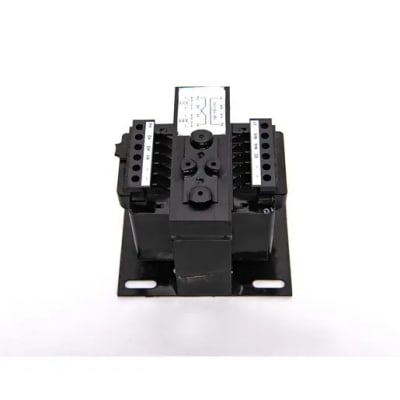
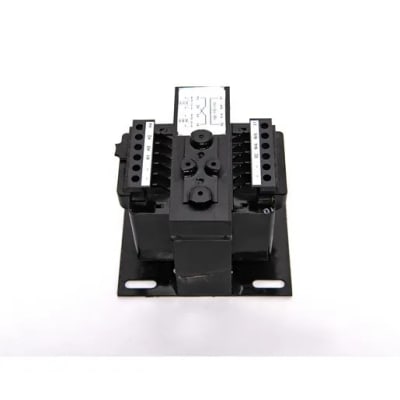
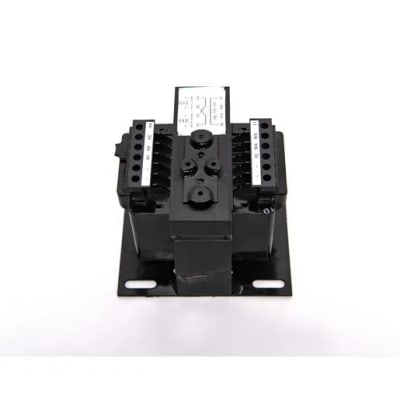
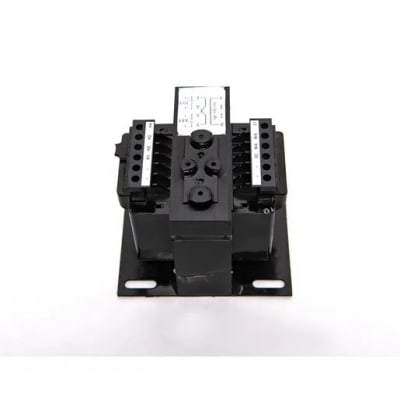
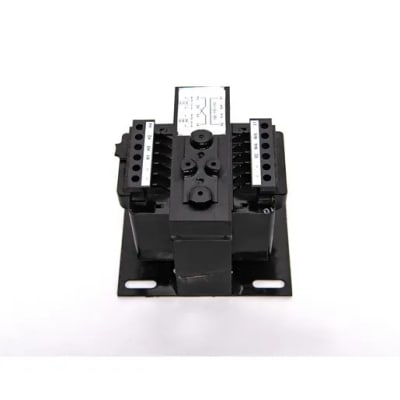
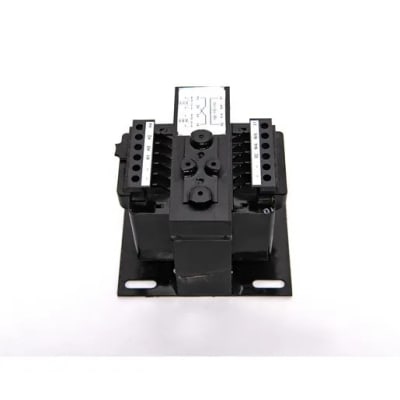
For replacement work, compare VA, primary/secondary voltages, frequency, mounting footprint, terminal arrangement and enclosure or open-core construction rather than crossing solely by physical size.
Electromagnetic devices such as contactors and solenoids draw substantially more current while closing than after they are seated. The transformer must keep control voltage high enough during that brief pickup period for reliable operation.
Typical loads include motor starters, contactors, relays, solenoids, pilot lights and other machine-control devices.
No. Match the required primary and secondary voltages, phase and frequency as applicable, taps, VA/inrush requirement, protection configuration, mounting and physical dimensions.
Excessive secondary voltage drop during device pickup can cause contactors or relays to chatter, fail to close or operate unreliably.
