
Shop telephone line cords and coiled handset cords for phones, voice equipment, office systems and legacy telecommunications installations. Wallco offers modular phone cords in multiple conductor configurations, cable lengths and colors.
Compare cords by modular connector type, conductor count, straight or coiled construction, cable length and equipment requirements.


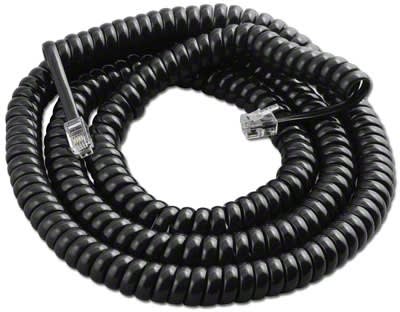


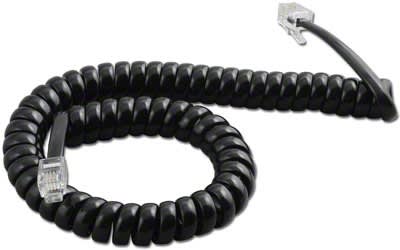

Telephone and handset cords provide modular connections between telephones, wall outlets, handsets and compatible voice equipment. Although these cable assemblies often use similar modular connectors, line cords and handset cords can have different connector sizes, conductor arrangements and wiring requirements.
Telephone line cords connect compatible telephones and communications devices to wall outlets, modular jacks or other telephone equipment. Common assemblies use modular plugs on both ends and are available in different lengths for desks, offices and equipment installations.
Coiled handset cords connect a telephone handset to the telephone base. Their coiled construction allows the cord to extend during use while retracting to reduce excess cable around the telephone.
Telephone equipment may use several modular connector formats with different numbers of positions and conductors. Handset connectors and telephone-line connectors can appear similar but may not use the same dimensions or wiring arrangement.
Modular telephone cords are available with different conductor counts depending on the application. Common voice connections may use two, four or more active conductors. Match the required conductor arrangement to the telephone system or equipment.
Straight modular cords are commonly used between telephone equipment and a wall or surface jack. Coiled cords are typically used between a telephone base and handset. Select the construction based on where the cable will be installed.
Telephone cords are available in multiple lengths for desktop, office and equipment installations. Choose enough length to reach the required connection without creating unnecessary loops or routing problems.
Replacement cords can be useful for existing office phones, analog telephone systems, communications hardware and older equipment. When replacing an original cord, compare both connectors as well as conductor count and wiring arrangement.
Determine whether the application requires a telephone line cord or handset cord first. Then identify the modular connectors, number of conductors, required cable length and whether straight or coiled construction is appropriate.