
Telco and breakout cables take a high-density multi-pair connection and fan it out to individual modular or equipment interfaces. They are used in voice systems, patching, legacy PBX installations, telecom distribution and service environments where one multi-pair trunk must connect to multiple stations or ports.
Common configurations use 25-pair/50-position telco interfaces and break out to multiple 6P or 8P modular connectors. Wiring schemes can follow USOC, AT&T or application-specific pin assignments, so the connector count alone does not establish compatibility.
Select the cable by trunk connector, breakout connector type, number of branches, gender, pinout convention and cable length.
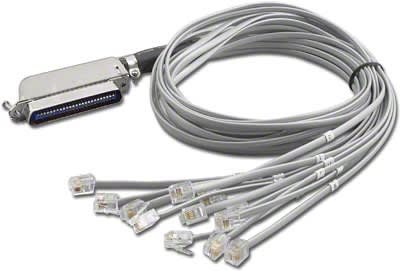


Confirm the high-density end first, including contact count and gender. Telco connectors that look similar can be wired differently for voice, data or proprietary equipment.
On the breakout side, identify the number of ports and modular format, such as 6P6C or 8P8C. Make sure the equipment expects the same conductor assignment used by the cable.
Pay close attention to wiring conventions. USOC and vendor-specific assignments can route pairs differently, and reversing male/female orientation does not automatically correct a pinout mismatch.
For replacements in existing PBX or telecom systems, compare the original cable part number or wiring diagram whenever possible before changing the breakout harness.

