
Serial and parallel cables support equipment that still relies on RS-232, DB9, DB25 and legacy printer-style interfaces. These connections remain common in industrial controls, automation equipment, test instruments, service ports, routers, terminals, machine interfaces and older computer peripherals.
Connector shape alone does not identify the wiring. Two DB9 or DB25 cables can use different pin assignments, genders or signal arrangements, including straight-through and null-modem configurations.
Select the cable by the equipment interface, connector on each end, gender, pinout, wiring type and length. When replacing an existing assembly, the original equipment documentation or cable part number is the safest reference.


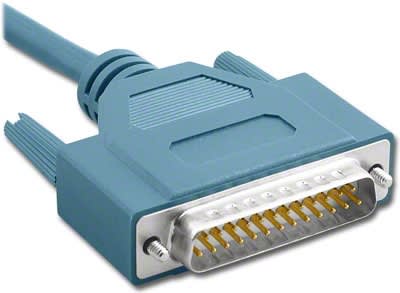
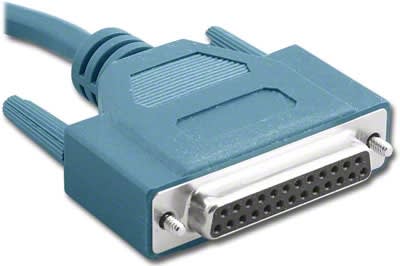

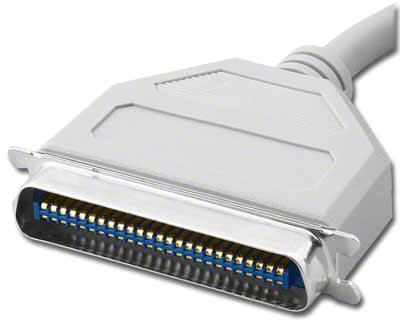


RS-232 is a serial communications interface widely used for equipment setup, diagnostics and point-to-point control connections. Common connector formats include DB9 and DB25, but the connector does not by itself define the cable wiring. Verify the required pinout and whether the equipment expects a straight-through cable or a null-modem crossover arrangement.
A null-modem cable is used when two devices that normally expect opposite DTE/DCE roles must communicate directly. Because transmit, receive and handshaking lines may be crossed differently, substituting a standard straight-through cable can prevent communication even when both ends physically fit.
Legacy parallel printer connections commonly use DB25 and 36-position Centronics-style connectors. For these assemblies, confirm both endpoint connectors, cable length and the equipment's required parallel interface before ordering. Specialized DB25 cables may also be used for control or equipment-specific functions and should not automatically be treated as printer cables.
Longer serial runs and electrically noisy industrial environments can introduce communication problems. When troubleshooting an existing installation, consider cable length, shielding, grounding, baud rate and the equipment manufacturer's interface requirements in addition to connector type.
