
RCA cables are widely used for unbalanced analog audio. Stereo applications typically use separate left and right connectors, while a single RCA cable may carry a mono channel, subwoofer/LFE feed or another line-level signal. The connector is simple and common, but it does not by itself define the signal carried.
For analog audio, shielding, cable length and secure connector fit are the main performance considerations. RCA is generally best for short to moderate equipment interconnects because unbalanced signals are more susceptible to ground-loop hum and electromagnetic noise than balanced professional interfaces.



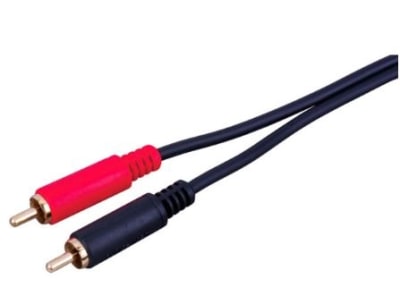
A stereo analog connection normally uses two RCA plugs per end, conventionally identified for left and right channels. Mono devices may use one cable. Subwoofer connections also commonly use RCA connectors, but the equipment determines whether the signal is line-level, LFE or another format.
RCA analog audio normally uses a center conductor for signal and an outer return/shield. Because the shield participates in the signal return, noise and ground-potential differences can be more problematic over long runs. Keep cables reasonably short and separated from power wiring when possible.
A continuous shield helps reduce electrostatic noise. Connectors should fit firmly without requiring excessive force that could damage equipment jacks. Gold plating can reduce contact oxidation, but overall cable construction and a sound electrical connection are more important than plating alone.
RCA connectors have also been used for composite video, component video, digital coaxial audio and other signals. A cable may physically connect these devices, but impedance and construction requirements can differ. Match the cable to the signal application, especially for video and digital coaxial links.
Identify whether the application is stereo, mono, subwoofer or another signal, then choose the shortest practical length and appropriate connector configuration. If a long run through a noisy environment is required, consider whether the equipment supports a balanced interface instead.
RCA connectors appear in several neighboring categories. Stereo analog audio usually uses red/white pairs, composite video often uses yellow, and component video may use three RCA connectors. Digital coaxial audio can also use RCA. Color conventions help users, but the electrical signal and required cable impedance remain the authoritative basis for selection.
Before ordering rca audio cables, record the equipment interfaces at both ends, the required electrical or signal standard, cable length, installation environment and any existing part number or cable marking. For replacements, matching only the connector can be misleading; confirm the underlying signal type, impedance, conductor configuration, performance rating and environmental requirements. Providing those details helps Wallco narrow the correct product and avoid compatibility problems.
Cable performance is a system issue: the source, destination, connectors, cable construction, length and installation conditions all contribute to the result. A cable that physically fits is not automatically electrically compatible, and a higher advertised category or bandwidth does not correct a mismatched interface. When in doubt, start with the equipment manufacturer specifications and choose a cable assembly or bulk cable that explicitly supports those requirements.
Wallco can help compare cable construction, connectors, ratings and application requirements when you are selecting a new installation product or replacing an existing cable. If available, provide the connected equipment models, existing cable markings, required length and installation environment so the options can be narrowed accurately.