
Paging horns are directional loudspeakers designed to project voice and alert tones over longer distances or through higher ambient noise than typical ceiling speakers. They are widely used in warehouses, manufacturing plants, loading docks, outdoor areas, parking facilities and campuses where intelligibility is more important than full-range music reproduction.
Selection depends on sound-pressure requirements, coverage angle, mounting location, amplifier topology, transformer taps and environmental exposure. A horn that is too small can disappear into machinery noise; one that is oversized or poorly aimed can create excessive reverberation and harsh sound.
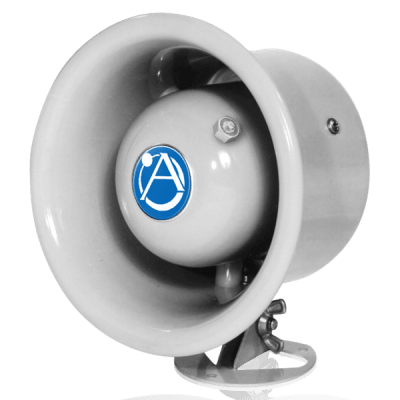


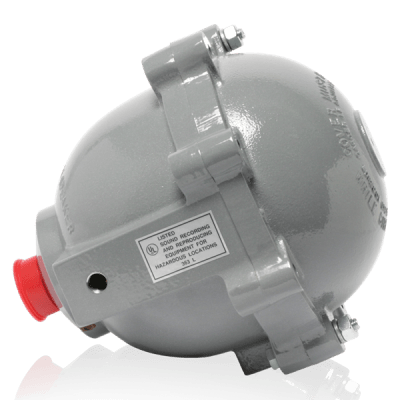


Horn geometry focuses acoustic energy into a defined area. Narrower coverage can project farther, while wider patterns can cover nearby work areas with fewer devices. Mounting height and aiming are critical. The goal is to deliver sufficient level at listeners while minimizing spill into reflective surfaces or neighboring zones.
Many commercial paging horns include transformers for 70V or 100V distributed audio. Installer-selectable taps determine how much amplifier power each horn consumes. Add the selected tap wattages for all speakers on the circuit and leave appropriate amplifier headroom. Low-impedance horns also exist and require different amplifier and wiring calculations.
Voice paging must rise above the local noise floor without becoming painfully loud. Machinery, conveyors, ventilation and open loading areas can vary dramatically in noise level. In difficult environments, more properly placed horns at moderate levels can outperform a few extremely loud horns. Reverberation time also affects speech clarity.
Outdoor horns should be selected for the expected exposure to rain, dust, temperature and ultraviolet light. Verify environmental ratings, mounting hardware and corrosion resistance. Even when the horn itself is weather-resistant, cable entries and terminations must be installed appropriately for the location.
On transformer-coupled systems, select the lowest tap that achieves the required sound level. Higher taps increase acoustic output but also consume more amplifier capacity. When expanding an existing system, calculate the present speaker load before adding horns. An overloaded amplifier can clip, distort or shut down during paging.
Document the coverage area, mounting height, ambient noise, indoor/outdoor environment, available amplifier voltage and desired paging zones. Then compare horn sensitivity, coverage pattern, transformer taps and mounting options. For replacement work, match the electrical system as well as the mechanical footprint.
More wattage does not automatically mean clearer paging. Placement, sensitivity and coverage are equally important. A 70V horn should not be connected as though it were an ordinary low-impedance speaker. Outdoor capability should be confirmed from the product rating, not assumed from the horn shape.
Paging horns are often organized into zones so announcements reach only the appropriate work area. When adding horns to an existing system, confirm available amplifier capacity, the existing transformer-tap total and how zoning is switched. Documenting each horn location and tap setting makes future troubleshooting and expansion much easier.
Wallco can help compare specifications, compatibility and application requirements when you are selecting new components or replacing an existing part. Providing the manufacturer and model of the equipment you are connecting to, along with key electrical, mechanical and environmental requirements, helps narrow the correct choice.