
Outdoor and landscape speakers are designed to deliver distributed audio in patios, walkways, courtyards, hospitality areas, campuses and other spaces where exposure to weather and wide listening areas change the design requirements. Unlike ordinary indoor speakers, outdoor models must balance acoustic coverage with enclosure durability, corrosion resistance and mounting flexibility.
Start with the listening area and system topology, then confirm power handling, impedance or transformer taps, coverage pattern, mounting method and environmental rating. Distributed 70 V or 100 V systems are common in larger commercial areas, while low-impedance speakers may be appropriate for smaller zones or dedicated amplifiers.
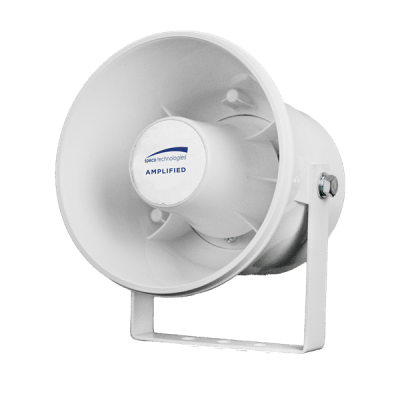


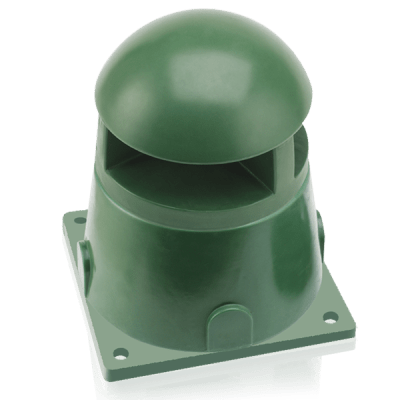
Outdoor audio can include wall-mounted cabinet speakers, garden or landscape speakers, surface-mount models and purpose-built architectural products. Coverage needs differ: a patio may need focused sound from a few wall speakers, while a walkway or landscaped area often benefits from more speakers operating at lower levels for even coverage.
Look beyond the word “outdoor.†Enclosure material, grille finish, hardware, gasket design, UV resistance and drainage all affect long-term performance. Installations near pools, coastal environments, washdown areas or industrial sites may require greater corrosion resistance than a protected residential patio.
Commercial outdoor systems often use speakers with built-in transformers so many speakers can share a long cable run. Transformer tap settings determine how much amplifier power each speaker consumes. Add the selected taps across the zone, then leave reasonable amplifier headroom rather than sizing the amplifier exactly to the connected load.
Outdoor spaces have few reflective boundaries, so sound level falls off quickly with distance. More speakers placed closer to listeners usually produce more even sound and lower spill into neighboring areas than a small number of very loud speakers. Coverage angle, mounting height and aiming should be considered together.
Use cable and connectors appropriate for the installation environment and local code requirements. Protect terminations from moisture, provide strain relief, and account for conduit, direct-burial or exposed routing where applicable. Mounting hardware should support the speaker securely while allowing the required aiming range.
Match the speaker to the amplifier, environment and coverage objective. Useful comparison points include frequency response, sensitivity, maximum SPL, power rating, impedance, transformer taps, dispersion, mounting options and environmental construction. For replacement work, confirm both electrical compatibility and the physical mounting pattern.
Outdoor and landscape speakers are used in restaurants, resorts, schools, public spaces, offices, houses of worship, pool areas and residential entertainment systems. A distributed commercial system may prioritize intelligible background music and announcements, while a residential zone may prioritize stereo imaging and fuller low-frequency response. Determine whether the system is background music, foreground music, paging or mixed use because that affects speaker spacing, amplifier power and acceptable sound-pressure level.
When replacing an existing outdoor speaker, record the amplifier type, existing wiring, speaker impedance or transformer tap, mounting method and environmental exposure. Replacing one speaker in a distributed zone with a substantially different sensitivity or tap setting can make that location noticeably louder or quieter. If several old speakers are being replaced, review the complete zone load rather than assuming the new models can simply inherit the old tap settings.
For a replacement or new installation, send Wallco the equipment model, system type, electrical or network requirements, installation environment and any compatibility constraints. The more application detail provided, the easier it is to narrow the correct product family and avoid a physically similar but incompatible part.
