
Heat stress meters evaluate thermal conditions that can place workers, athletes and other exposed people at risk. Many instruments calculate Wet Bulb Globe Temperature (WBGT), a widely used index that combines the effects of air temperature, humidity, radiant heat and, depending on the method, natural wet-bulb conditions.
A heat stress meter is most useful when its measurement method matches the applicable safety program. Sensor configuration, indoor/outdoor calculation mode, stabilization time, data logging and calibration capability all matter when readings are used to guide work/rest decisions.
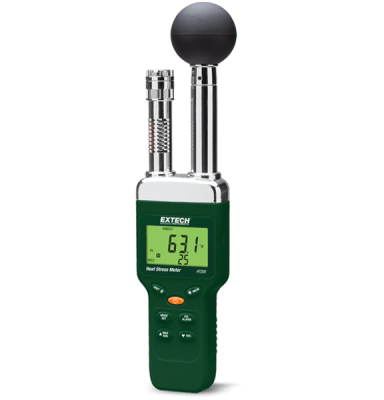

Heat index is based primarily on air temperature and relative humidity and is commonly associated with shaded conditions. WBGT is designed to account more directly for environmental heat load, including radiant heat, and is often used in occupational and athletic settings. The two values should not be treated as interchangeable.
If an employer or governing standard specifies WBGT, use an instrument and procedure intended for WBGT measurement rather than substituting a simple temperature/humidity reading.
Traditional WBGT evaluation uses dry-bulb, natural wet-bulb and black-globe temperature inputs. The globe sensor responds to radiant heat from sources such as sunlight, furnaces or hot process equipment. Instrument designs vary, so understand how the selected model derives its displayed WBGT value.
Sensor placement is critical. Position the instrument where the person is actually exposed, away from artificial shielding or heat sources that are not representative of the work area.
Globe and wet-bulb sensors require time to equilibrate with the environment. Moving a meter from an air-conditioned space directly into a hot area and recording the first displayed value can produce misleading results. Follow the manufacturer stabilization guidance.
For changing conditions, use repeated measurements or logging. Outdoor heat load can shift with cloud cover, wind and solar angle, while indoor heat may vary with equipment cycles.
WBGT is one input to a heat-stress prevention program. Work intensity, clothing, acclimatization, hydration, personal protective equipment, health status and exposure duration also affect risk. Use the applicable occupational or organizational guidance to translate readings into action levels.
Meters do not diagnose heat illness. Anyone showing symptoms requires appropriate immediate response regardless of the displayed index.
Useful features include indoor/outdoor modes, adjustable alarm thresholds, data logging, tripod mounting, min/max/average, replaceable sensors and calibration support. For formal programs, consider whether traceable calibration documentation is required.
For a faster and more accurate selection, confirm the following application details before comparing part numbers:
Heat stress meters are environmental risk-assessment tools, not ordinary infrared thermometers. They evaluate combined thermal conditions rather than simply reporting the surface temperature of an object.
No. WBGT incorporates additional environmental factors, especially radiant heat, and is used differently.
At a location representative of the actual person or work area being evaluated.
A reading should be interpreted using the applicable heat program, workload, clothing and exposure guidance.