
Shop Ethernet switches for connecting computers, controllers, cameras, access points and other network devices within commercial, industrial and structured network installations. Wallco offers managed, unmanaged and other Ethernet switching solutions for copper and fiber-capable networks.
Compare switches by port count, network speed, management features, copper and fiber interfaces, PoE capabilities and installation requirements. Select a switch that matches the connected equipment and the overall network design.
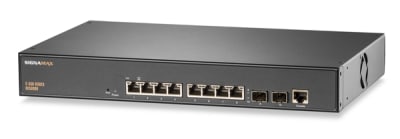

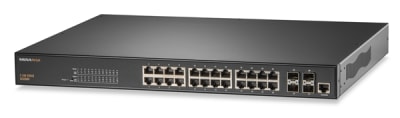
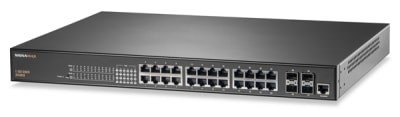


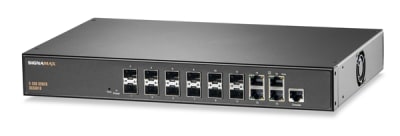


Ethernet switches provide the central connection points that allow multiple network devices to communicate across a local network. Computers, controllers, cameras, wireless access points, servers, building systems and other Ethernet-enabled equipment can connect through a switch and share the network infrastructure.
Switches are available in a wide range of configurations, from straightforward unmanaged devices to managed switches with additional network-control capabilities. Selection depends on the required port count, network speed, media type, management requirements and installation environment.
One of the primary distinctions between Ethernet switches is whether the device is managed or unmanaged.
The appropriate switch type depends on the complexity of the network and the amount of configuration, monitoring and control required.
Port count is important, but it is only one part of switch selection. The switch should be evaluated against the devices being connected and the design of the complete network.
Many Ethernet switches primarily use RJ45 copper ports for connecting local devices. Other switches may provide fiber interfaces or modular transceiver slots that allow optical links to be added for uplinks, backbone connections or longer-distance network segments.
When fiber connectivity is required, review the switch interface together with the optical transceiver and fiber cabling. The transceiver must be compatible with the switch and with the fiber type, connector format, network speed and link distance.
A switch with both copper and fiber capability can provide a convenient transition between local copper device connections and a fiber backbone.
The required number of switch ports depends on the number of devices that need network access. Small installations may require only a few ports, while equipment rooms, surveillance systems and larger commercial networks may require substantially more connections.
When calculating capacity, include not only end devices but also uplinks and other network connections that consume switch ports. Leaving some unused capacity may simplify future expansion without immediately requiring an additional switch.
Power over Ethernet can allow compatible network devices to receive both communications and electrical power through the Ethernet connection. This can simplify installations involving devices such as network cameras, wireless access points, phones and other compatible equipment.
When selecting a PoE-capable switch, verify both device compatibility and the available switch power capacity. The presence of PoE ports alone does not mean that every connected powered device can necessarily operate simultaneously at its maximum required power.
Review the requirements of the connected equipment and the specifications of the switch before planning the PoE load.
Industrial Ethernet networks may place switches near control equipment, machinery or other environments outside conventional office spaces. Industrial switches can be designed around mounting and power arrangements commonly used in automation and control systems.
When selecting equipment for an industrial application, consider the switch's specified operating environment, enclosure, mounting method, power input and network interfaces. The requirements of a factory or machine network may differ considerably from those of a climate-controlled telecommunications room.
A managed Ethernet switch may be appropriate when administrators need additional visibility or control over the network. Managed-switch capabilities vary by product, so required functions should be verified against the specifications of the individual model.
Applications with multiple network segments, industrial systems, larger surveillance networks or more complex infrastructure may benefit from managed switching. Simpler networks may not require the added configuration capabilities.
Ethernet switches may be used in applications including:
An Ethernet switch should be selected based on the entire network rather than port count alone. Consider the devices being connected, required network speeds, copper and fiber interfaces, management requirements, power availability and installation environment.
If the network includes fiber uplinks or removable optical modules, verify the switch, transceiver and fiber cabling together. If PoE devices are involved, review the connected device requirements and switch power capabilities before ordering.