
Data and peripheral switch boxes provide a simple hardware method for selecting which connected device is routed to a shared interface. They are commonly used with legacy computers, terminals, printers, test equipment, industrial controls and other equipment that uses multi-pin serial, parallel or D-sub connections.
Unlike an electronic network switch, these devices typically perform direct mechanical or passive contact switching. The connector type, number of positions and wiring arrangement therefore matter: a 2-way or 4-way DB25 box cannot be assumed to support the same pin usage as another device simply because the shell size matches.
Use these products when the application calls for controlled A/B, A/B/C, A/B/C/D or crossover selection without software, protocol conversion or active signal processing.


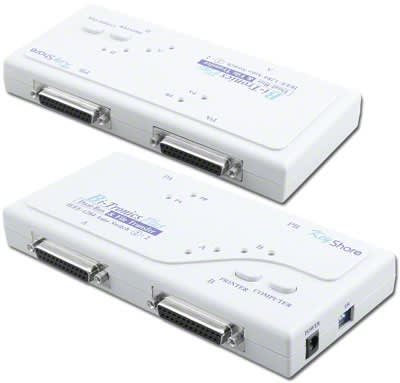
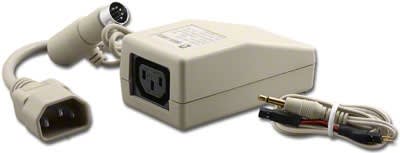
First match the physical interface exactly, including connector family, contact count and gender. Common configurations include DB9, DB15, DB25, DB37, DB50 and Centronics-style connections. Confirm that the switch box passes every conductor required by the application.
Next determine the switching function. Straight multi-position selector boxes route one common port to one of several device ports. Crossover or matrix-style boxes may use a different internal arrangement and should not be substituted without confirming the wiring diagram.
Because many applications use RS-232, parallel printer signaling or proprietary control wiring, connector shape alone does not establish electrical compatibility. Verify the equipment pinout, grounding and shield requirements before connecting devices.
For troubleshooting and lab use, passive switch boxes can be useful because they introduce no protocol conversion. For high-speed differential, USB, Ethernet or other impedance-controlled interfaces, use equipment specifically designed for that signaling standard rather than a generic mechanical switch box.