
Shop copper patch panels for organizing and terminating structured Ethernet cabling in network racks, cabinets and telecommunications spaces. Wallco offers patch-panel options for common copper cabling categories and network infrastructure applications.
Compare patch panels by cable category, port count, shielding, termination method and mounting format. Selecting a panel that matches the installed cabling system helps create an organized and serviceable network connection point.





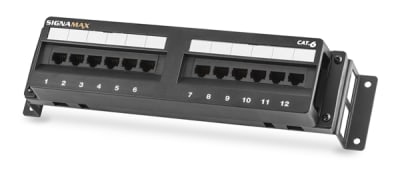
Copper patch panels provide an organized termination point for Ethernet cabling in telecommunications rooms, equipment rooms, data cabinets and network racks. Permanent horizontal cabling can terminate at the rear or within the panel, while accessible ports on the front provide connection points for patch cords leading to Ethernet switches and other network equipment.
Using patch panels helps separate permanent building cabling from the flexible patch cords used for day-to-day network connections. This arrangement can make network changes, troubleshooting and equipment replacement easier while keeping large numbers of cable runs organized.
Copper patch panels are available in configurations designed for different structured-cabling systems and installation requirements. Important differences can include performance category, port count, shielding, physical size and termination style.
The patch panel should be selected to match both the cabling system and the physical network installation. A panel with the correct number of ports may still be unsuitable if its cable category, shielding configuration or mounting format does not match the infrastructure.
The performance category of a patch panel should correspond with the structured-cabling system in which it will be installed. Category 5e, Category 6 and Category 6A systems each use connectivity designed to meet the requirements of the corresponding cabling category.
Installing a higher-category patch panel does not automatically upgrade an existing lower-category cabling system. The completed network channel includes the permanent cable, patch panel, modular jacks, patch cords and other connecting hardware, so overall performance depends on the complete installation.
When replacing an existing panel, identifying the category of the installed horizontal cable is a useful first step. For a new installation, the panel should be selected as part of the overall cabling design rather than after the cable has already been installed.
Patch-panel port count affects both network capacity and the amount of rack space required. Smaller installations may need relatively few ports, while larger telecommunications rooms can require multiple panels to accommodate many horizontal cable runs.
Consider both present and expected network requirements when planning panel capacity. Leaving reasonable expansion space can make future network additions easier without requiring an immediate replacement of existing connectivity hardware.
Rack layout also matters. Patch panels, horizontal cable managers and Ethernet switches are frequently arranged together so patch cords can be routed cleanly between equipment.
Many commercial structured-cabling systems use unshielded twisted-pair connectivity, while other environments use screened or shielded cabling and components. The patch panel should match the design of the installed system.
In shielded installations, the panel is only one part of the overall shielding system. Cable, jacks, patch cords and related connecting hardware should also be compatible with the intended design. Grounding and bonding requirements should be addressed according to the installation and applicable system requirements.
When replacing a panel in an existing network, confirm whether the current cabling and jacks are shielded before choosing the replacement.
A patch panel is a passive connectivity component; it does not perform the switching functions of an Ethernet switch. Instead, it provides an organized interface between permanent structured cabling and the active network equipment.
Patch cords are typically used to connect front-facing patch-panel ports to Ethernet switch ports. This arrangement allows network assignments to be changed without disturbing the permanent horizontal cabling terminated at the panel.
When planning a rack, consider the patch panels, switches, patch cords and cable-management hardware together. Proper organization can make individual connections easier to identify and reduce unnecessary cable congestion.
Copper Ethernet patch panels may be used in applications including:
A patch panel should be considered one part of the complete copper network channel. Permanent cable, patch panels, jacks, patch cords and network equipment all contribute to the finished installation.
Before ordering, verify the installed cable category, shielding configuration, required port count, termination method and rack-mount format. When replacing an existing panel, comparing these details with the original equipment can help avoid compatibility problems.
