
Audio matrix processors route multiple audio sources to multiple output zones while applying digital signal processing such as level control, equalization, mixing, delay, filtering, limiting and priority logic. They are central components in conference, hospitality, retail, education, worship and multi-zone commercial audio systems.
The correct processor depends on input/output count, analog and digital formats, microphone preamps, DSP resources, network audio, control integration, latency, presets and whether paging or emergency-priority functions are required.
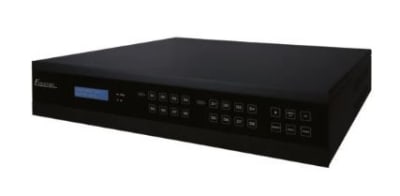
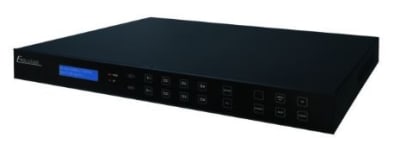
A matrix allows any input to be assigned to one or more outputs independently. This makes it possible for a restaurant, hotel or campus to play different sources in different zones while sharing paging or announcement inputs across all areas.
Count both current and future I/O. Expanding a processor later can be more difficult than reserving a few extra channels during design.
Common DSP blocks include EQ, high-pass and low-pass filters, compressors, limiters, gates, automatic gain control, delay and feedback suppression. Microphone-oriented processors may include echo cancellation, automixing and phantom-powered preamps.
DSP capability should match the application rather than be treated as a checklist. A retail background-music system needs different processing from a conferencing room or performance space.
Traditional processors use balanced analog inputs and outputs. Modern systems may add AES/EBU, USB, Dante or other network-audio interfaces. Network audio can simplify large systems but introduces switch configuration, clocking and network-management requirements.
Confirm sample rate, channel count and interoperability for the chosen network-audio platform.
Wall panels, GPIO, RS-232, Ethernet APIs and third-party control-system drivers allow nontechnical users to select sources and adjust zones without accessing the DSP software. Presets can reconfigure routing for different room uses.
For unattended systems, define startup state and behavior after power loss so the processor returns to an appropriate configuration.
Commercial systems often need paging ducking, emergency override or source priority. Verify how priority logic works and whether it is suitable for life-safety interfaces; a general-purpose DSP should not be assumed to meet emergency communication requirements unless specifically listed for that function.
Output limiting can protect downstream amplifiers and speakers, while input gain structure should be set to avoid clipping and excessive noise.
For a faster and more accurate selection, confirm the following application details before comparing part numbers:
An audio matrix processor combines routing and DSP, but it is not automatically a power amplifier. Confirm whether downstream amplifiers are required and whether the processor provides only line-level outputs.
It means multiple inputs can be routed independently to multiple outputs or zones.
Not always. Many matrix processors include mixing and microphone preamp functions, but requirements vary.
Many can provide paging priority and ducking, but life-safety applications require equipment specifically approved for that purpose.