
Access control card readers are the field devices that identify a presented credential and pass that credential data to an access control system for an authorization decision. They are used at controlled doors, gates, turnstiles, cabinets and other secured openings where an organization wants repeatable, auditable entry instead of relying only on mechanical keys.
Selecting a reader requires more than matching its appearance to the door. Credential technology, reader-to-controller communication, mounting style, environmental rating, read range, power requirements and compatibility with the existing credential population all matter. In retrofit work, the reader must also fit the installed wiring and the controller inputs already in place.

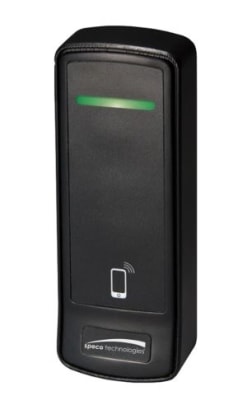
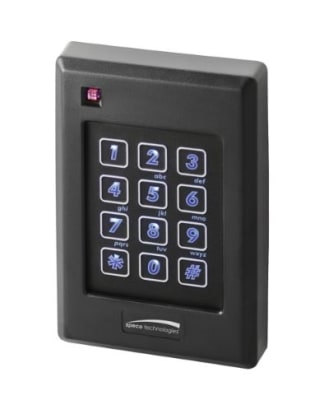
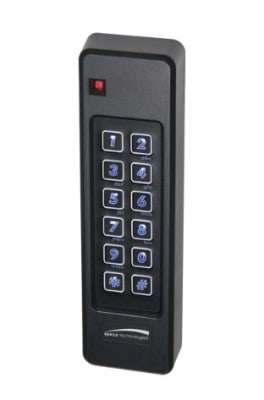

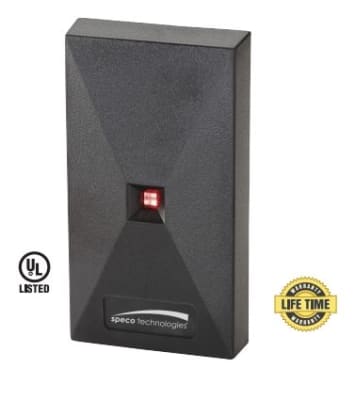
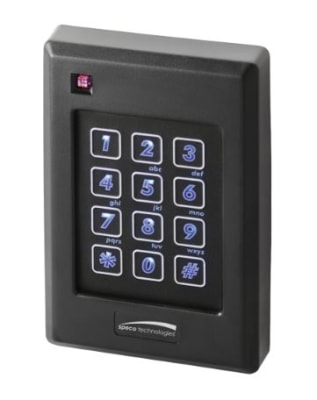
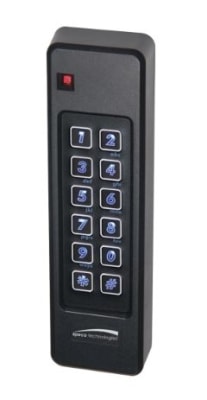
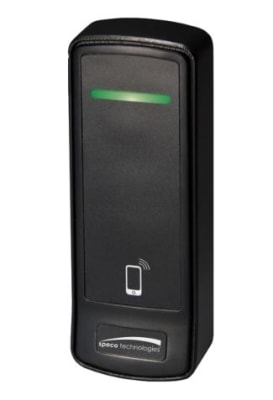
Common reader families include low-frequency proximity, high-frequency contactless smart-card and multi-technology readers. Proximity readers are widely encountered in legacy systems, while smart-card technologies can support stronger credential security and more flexible applications. Multi-technology readers can be useful during migrations because they may read more than one credential family. The correct choice depends on the credentials the organization issues today, the security level required and the planned path for future upgrades.
Verify how the reader communicates with the controller. Existing installations may use traditional reader interfaces, while newer platforms may support supervised or encrypted communications. Communication compatibility is critical: a reader can physically fit a location and still be unusable if the controller cannot interpret its output. For replacements, document the existing reader model, controller model, wiring conductors and interface before ordering.
Readers are available in mullion, wall-switch, single-gang and other form factors. Narrow mullion readers suit aluminum door frames, while larger wall-mount readers may offer greater read range or additional indicators. Exterior entrances require suitable environmental protection, temperature range and resistance to moisture and sunlight. Metal mounting surfaces can influence performance on some credential technologies, so manufacturer mounting guidance should be followed.
LEDs, audible indicators and keypad combinations can provide clear feedback to users. Some applications require card-plus-PIN authentication, while others use card-only access. Consider visibility, accessibility and how users approach the opening. Reader placement should support convenient credential presentation without interfering with door hardware or creating a vulnerable mounting location.
For a replacement project, determine whether the goal is a like-for-like reader swap or a credential technology upgrade. A migration may affect cards or fobs, controller firmware, enrollment procedures and software configuration. Multi-technology readers can sometimes allow old and new credentials to coexist during a staged transition, reducing the need to replace every credential at once.
Start with the credential technology and controller interface, then confirm mounting style, environment, read range, indicators, color and power requirements. For multi-door projects, standardizing reader technology and form factor can simplify spares and future maintenance. When upgrading an older system, evaluate the complete credential-reader-controller chain rather than selecting a reader in isolation.
A reader does not normally make the final access decision by itself; it identifies the credential and sends data to the control system. Read range varies by reader, credential type and mounting environment. A newer smart-card reader is not automatically compatible with older proximity cards, which is why credential technology should always be confirmed before replacement.
Wallco can help compare specifications, compatibility and application requirements when you are selecting new components or replacing an existing part. Providing the manufacturer and model of the equipment you are connecting to, along with key electrical, mechanical and environmental requirements, helps narrow the correct choice.
