
RCA plugs are cable-end male connectors used throughout analog audio, composite/component video, test equipment and legacy electronics. Choosing the right plug involves more than color or appearance: cable diameter, conductor size, shielding, strain relief, termination method and the expected signal all affect fit and reliability.
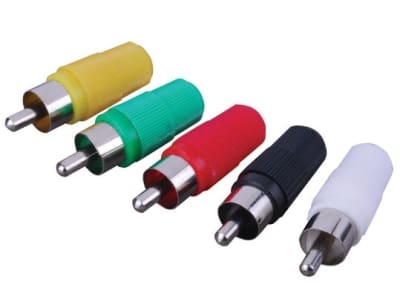
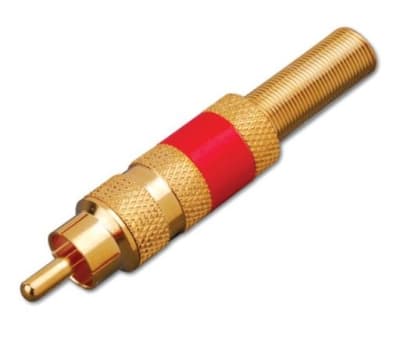
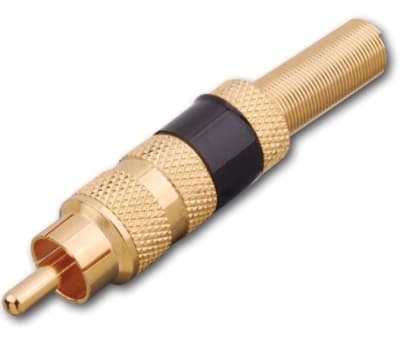
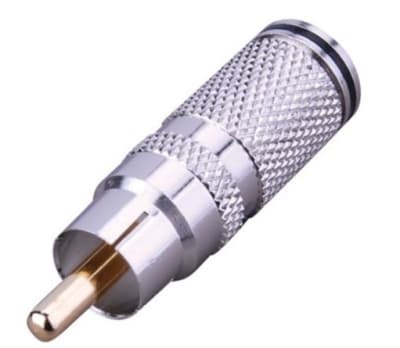
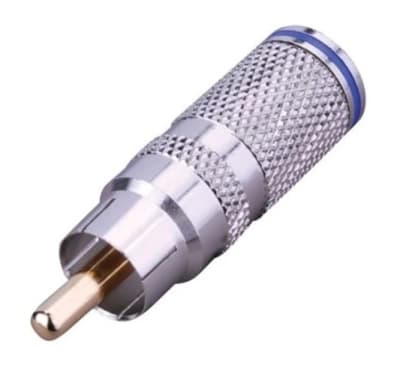
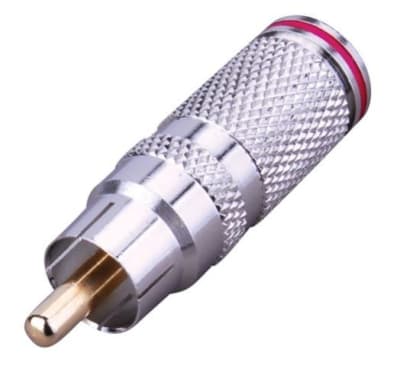


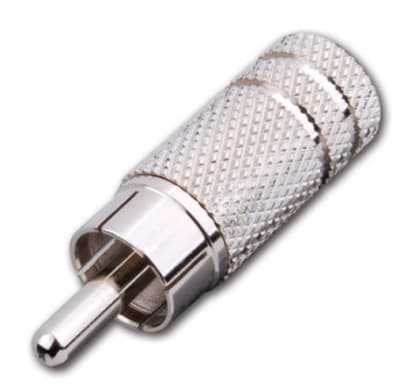


RCA plugs terminate coaxial or shielded cable for line-level audio, phono, subwoofer, composite video, component video and many equipment-specific analog signals. The same physical connector appears in both consumer and commercial equipment, so the application and cable construction should be identified before replacing a plug. A red or white shell usually suggests audio channel convention, while yellow is often used for composite video, but color coding is not an electrical standard by itself.
Match the plug to the cable outside diameter, center-conductor size and shield construction. Some plugs solder to the center conductor and shield, some use crimp ferrules, and others use compression or screw-style termination. A plug designed for miniature audio cable may not clamp properly onto larger 75-ohm video coax, while an oversized shell can provide weak strain relief on thin cable. For service work, the termination method should match the tools and workmanship available.
The RCA format is mechanically simple, but poor plating, loose center contacts, weak shield connection or excessive exposed conductor can create intermittent audio, hum, noise or video artifacts. In coaxial video and digital-audio applications, maintaining cable geometry through the termination is especially important. Gold plating can improve corrosion resistance in low-level signal environments, but good mechanical fit and a sound termination are more important than plating alone.
Straight plugs are easiest to terminate and work well where rear clearance is available. Right-angle and low-profile plugs can reduce cable bend radius behind racks, wall plates and tightly packed equipment, but they must still provide adequate strain relief. Check the direction of the cable exit when multiple adjacent connectors are present so one plug does not block another jack.
Record the cable type, outside diameter, number of channels, connector gender, available rear clearance and whether the existing connector is soldered, crimped or molded. On older equipment, inspect the mating jack as well; replacing a plug will not correct a worn or loose chassis receptacle. For video, phono or other low-level signals, verify that the replacement cable and connector are appropriate for the electrical application rather than selecting only by appearance.
For permanent installations, distinguish between a connector intended for small flexible audio cable and one built around true coaxial construction. Video, digital-coax and subwoofer cables may use larger dielectric and shield structures that need a plug with the correct internal dimensions. Also consider whether the cable will be frequently connected and disconnected; a serviceable metal-shell plug may be preferable to a compact molded style when field repair is expected.
RCA plugs belong on cable ends. If the requirement is a chassis or wall-plate connection, use an RCA jack or receptacle instead. If both existing cables already have male plugs and only need to be joined, an RCA coupler is the more appropriate category. Keeping plug, jack and adapter functions separate reduces the temptation to solve a mechanical mismatch with a stack of unnecessary adapters.
Two common mistakes are choosing a plug that clamps the center conductor but provides weak shield termination, and choosing a shell that cannot grip the cable jacket. Both can create a connector that works on the bench but fails after repeated flexing. For color-coded multi-channel systems, keep the original channel convention when practical so future service personnel can trace the installation quickly.
The physical connector may be the same, but the cable and termination requirements can differ. Video generally benefits from true 75-ohm coax construction, while audio assemblies may use different shielded cable.
Yes, when the plug is designed for field termination and the cable construction is known. Molded plugs are normally replaced by installing a new connector or replacing the complete cable.
Wear, undersized outer contacts, damaged jack shells or poor-quality terminations can reduce retention. Check both halves of the connection.
Wallco can help narrow connector family, gender, contact count, termination, cable fit and application requirements. For replacements, provide the equipment manufacturer/model, clear photos of the mating face and side profile, and any dimensions or pinout information available.
