
Compact Mini-UHF threaded connectors used where a smaller RF interface is needed for mobile, transportation and communications equipment. Selection centers on plug/jack gender, cable group, termination, frequency, mounting, adapter needs and environmental requirements.
Wallco organizes mini-uhf connectors within UHF & Mini-UHF Connectors & Adapters so engineers, technicians, installers, OEM buyers and maintenance teams can narrow the correct RF component by the electrical, mechanical and installation details that determine real compatibility.
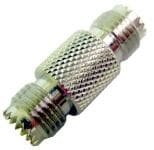
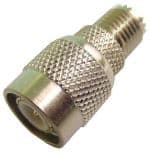
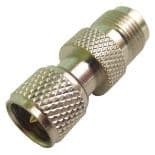
Compact Mini-UHF threaded connectors used where a smaller RF interface is needed for mobile, transportation and communications equipment. The correct part must match the complete transmission-line and mechanical interface, not merely the connector-family name.
Common applications include mobile radios, vehicle communications, scanners, public-safety equipment and compact RF assemblies. For replacement work, document both mating halves, the coax or board interface, mounting method and system impedance before selecting a substitute.
UHF-series PL-259/SO-239 connectors and Mini-UHF are distinct connector systems used mainly in radio and communications equipment. Despite the historical “UHF†name, classic UHF connectors are not constant-impedance precision microwave interfaces and are most common at lower RF frequencies. Mini-UHF offers a smaller threaded interface for compact equipment.
These connectors are available for different coax sizes and may use solder, crimp or combinations of methods. PL-259 installations often use reducers for smaller cable. Correct shield attachment and strain relief are essential for reliable mobile and radio service.
When servicing older radio equipment, identify the connector family carefully because UHF, Mini-UHF, TNC and other threaded RF connectors can be confused in photographs. Check thread size, body diameter, center contact, installed cable and equipment documentation before ordering.
Mini-UHF is a distinct, smaller connector family and should not be confused with PL-259/SO-239 UHF interfaces. It was widely adopted in compact mobile-radio installations where space mattered.
Vehicle installations expose connectors to vibration, repeated service and tight cable routing. Match the exact cable group and termination method, leave appropriate strain relief, and confirm whether the equipment port requires a plug, jack or adapter before replacing a field cable.
In mobile and radio installations, connector reliability depends on more than continuity. Support the coax near the radio, preserve cable bend radius and avoid allowing the connector to carry the weight of the cable. Where adapters are unavoidable, keep the chain short and mechanically supported. For transmitting equipment, verify the connector and cable are suitable for the operating frequency and power before putting the system into service.
When replacing an existing RF connector, the safest cross-reference starts with the original manufacturer part number or a complete set of dimensions and electrical requirements. Similar-looking RF connectors can differ in impedance, contact geometry, cable fit, mounting threads, plating and frequency performance. If the original part number is unavailable, identify the mating connector, cable manufacturer and cable number, panel/board arrangement and application frequency before selecting an alternate.
For cable assemblies, consider whether replacing the complete assembly is more reliable than reterminating a damaged connector in the field. High-frequency performance depends heavily on assembly workmanship, and a factory-terminated cable can reduce uncertainty when tooling or inspection capability is limited.
What is the most important specification when choosing mini-uhf connectors? Start with the exact mating interface and system impedance, then verify cable or mounting compatibility, termination method and frequency. No single specification is enough by itself.
Can two RF connectors mate physically and still be the wrong combination? Yes. Impedance, reverse-polarity center contacts, cable fit and electrical performance can differ even where mechanical mating seems possible. Always verify the complete specification.
Does a connector family name guarantee a frequency or environmental rating? No. Ratings vary by individual design, cable and assembly. Use the manufacturer datasheet when frequency, sealing, power or return loss is critical.
If you are replacing an existing mini-uhf connectors or specifying a connector for a new RF, video or communications application, provide Wallco with the equipment interface, cable type, impedance, required frequency, mounting style and any environmental requirements. Those details make it much easier to narrow the correct connector and avoid an electrically or mechanically incompatible substitution.
