
Cat6A patch cables are Category 6A twisted-pair Ethernet assemblies designed for demanding copper networks, including 10GBASE-T at full structured-cabling channel distances. Category 6A extends specified performance to 500 MHz and places greater emphasis on controlling alien crosstalk. It is a common choice for data centers, wireless access points, high-performance work areas, AV-over-IP, security and high-power PoE infrastructure.
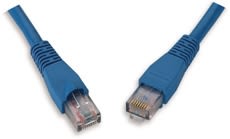
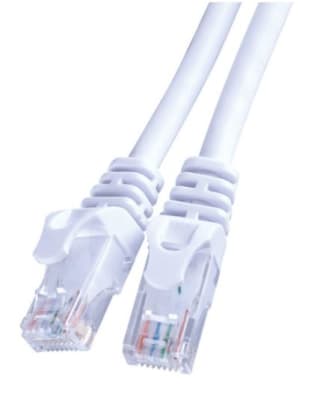
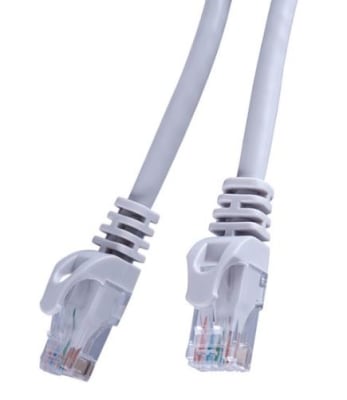
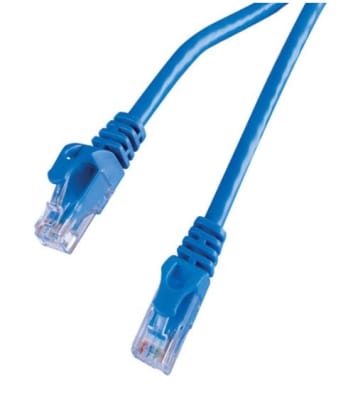
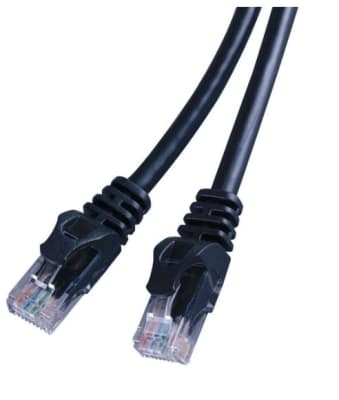
Category 6A was developed to support 10 Gigabit Ethernet more predictably over standard balanced-copper channel lengths. Its 500 MHz performance and alien-crosstalk requirements provide substantially more margin than Cat6 for high-speed networks. Cat6A is frequently selected when a facility wants a copper infrastructure capable of supporting current 10GBASE-T applications and future device upgrades.
As with every structured-cabling category, the patch cord is only one part of the channel. Jacks, patch panels, horizontal cable and installation practices should all be Cat6A-rated when Cat6A channel performance is required.
Cat6A is available in both unshielded and shielded constructions. UTP designs control crosstalk through geometry and cable construction; shielded designs use foil or braid in addition to balanced pairs. Shielding can be advantageous in electrically noisy industrial environments and can help manage alien crosstalk, but it requires compatible connecting hardware and proper bonding.
Shielded Cat6A is not automatically the right answer for every network. Pathway, grounding strategy, bend radius, cable diameter, environmental exposure and installer experience should be considered together.
Cat6A cords can be thicker than Cat5e or Cat6 because of conductor size, spacing and shielding. In dense switch fields, large-diameter patch cords can restrict airflow and make cable management difficult. Slim Cat6A cords are available, but their conductor size, PoE suitability and channel limitations should be verified.
Maintain the manufacturer’s bend radius, avoid crushing cable under cabinet doors or cable managers, and do not over-tighten hook-and-loop straps. Physical deformation can change pair geometry and degrade high-frequency performance.
Cat6A is commonly paired with modern PoE devices such as multi-radio wireless access points, PTZ cameras, lighting controls, displays and building-automation endpoints. Larger conductors and improved thermal characteristics can make Cat6A attractive for higher-power PoE, especially in large bundles.
The actual thermal design still depends on conductor gauge, cable bundle size, ambient temperature, pathway fill and power level. Use patch cords and connectivity explicitly rated for the intended PoE application.
Cat6A is well suited to 10GBASE-T links and provides strong margin for 2.5G/5GBASE-T multi-gigabit networks used by modern wireless access points. It is also widely used for bandwidth-intensive AV-over-IP and data-center edge connections where predictable copper performance matters.
For new facilities, the labor cost of installing cabling often exceeds the incremental cost of moving from a lower category to Cat6A, so lifecycle and future bandwidth can justify the upgrade even when today’s endpoints only use 1 Gigabit Ethernet.
Cat6 is typically specified to 250 MHz and can support 10GBASE-T over shorter distances. Cat6A doubles the frequency specification to 500 MHz and is designed for full-distance 10-Gigabit channels with alien-crosstalk control. Cat6A cords may be larger and more expensive, but they provide greater performance headroom.
Use Cat6A patch cords in Cat6A channels to preserve the intended performance. Mixing lower-category components can cause the channel to be treated as the lower category.
For Cat6A, verify that the surrounding jacks, panels and horizontal cable are also Cat6A when full channel performance is required. Record shield strategy, grounding approach, required length, PoE power, pathway density and bend-space limitations. In high-density switch environments, compare standard and slim cords carefully: a smaller diameter may improve airflow, but conductor size and high-power PoE suitability still need to match the application.
Cat6A is the copper category commonly specified for 10GBASE-T over full structured-cabling channel distances.
Cat6A RJ45 patch cords can generally connect to lower-speed Ethernet equipment, but system performance depends on the complete channel and electronics.
No. Both UTP and shielded Cat6A designs exist.
Wallco can help match connector type, electrical or optical requirements, cable length and installation conditions to the application. When possible, provide the equipment manufacturer/model, existing connector information and required run length.
