
AC power cords connect equipment to branch-circuit receptacles, power distribution units and other AC sources. A safe replacement must match plug/receptacle configuration, equipment inlet, voltage/current rating, conductor size, grounding, cord length and regulatory requirements. Common North American NEMA plugs and IEC equipment connectors are only part of a much larger family of cord sets used worldwide and in specialized industrial applications.


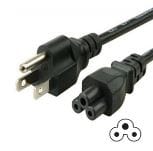


The wall-end plug must match the receptacle and electrical system. In North America this may be a NEMA 5-15, 5-20, locking configuration or another voltage/current-specific pattern. The equipment end may use an IEC 60320 connector such as C13, C15, C19 or other style, or it may be hardwired/proprietary.
Never select a cord solely because the connector can be forced to fit. Connector families are keyed for current, temperature and electrical-system differences.
Cord sets have voltage and current ratings that must meet or exceed the equipment requirements. Conductor gauge influences ampacity and voltage drop, especially on longer cords and higher-current loads. A thin cord that is acceptable for a low-power device may be inappropriate for a heater, server, industrial power supply or other high-load equipment.
Equipment nameplate current and connector ratings provide the starting point. Inrush current, continuous-load rules and installation codes may impose additional requirements.
Three-conductor grounded cords provide a protective equipment grounding path when used with compatible equipment. Two-conductor cords are appropriate only for equipment designed for that construction, such as properly double-insulated devices. Do not defeat a grounding pin or substitute an ungrounded cord for grounded equipment.
If grounding or polarity requirements are unclear, use the equipment manufacturer’s documentation rather than improvising adapters.
IEC equipment connectors are common on computers, monitors, UPS systems, servers and power distribution equipment. C13/C14 combinations are widely used for general IT loads, while C19/C20 support higher-current equipment. C15-type connectors are designed for higher-temperature appliance applications and are mechanically distinct.
In data centers, cord length, connector retention, PDU outlet type and color coding can be important for redundancy and serviceability in addition to electrical rating.
Cord jacket designation, flexibility and temperature rating should suit the environment. Office cords are different from heavy-duty service cords used around machinery, temporary power or harsher industrial locations. Oil, chemicals, abrasion, outdoor exposure and repeated flexing can all shorten the life of an unsuitable cord.
Inspect cords periodically for damaged insulation, loose blades, overheated connectors or strain-relief failure. Damaged power cords should be removed from service rather than taped as a permanent repair.
International equipment may require country-specific plugs and approvals. Voltage compatibility of the equipment must be verified separately; changing the cord does not convert a 120 V device into a 230 V device. Likewise, an adapter may change plug geometry without providing voltage transformation.
For OEM or export applications, identify destination country, receptacle standard, equipment inlet, current draw and required agency approvals before selecting a cord set.
For AC cord selection, record supply voltage, receptacle pattern, equipment inlet, nameplate current, required length, grounding, conductor gauge and environmental/temperature needs. For rack equipment, also document PDU outlet style and whether straight or right-angle connectors improve cable management. In export applications, confirm both the destination plug standard and the equipment input-voltage capability; a country-specific cord changes the connection method but does not transform voltage or frequency.
No. Verify voltage/current rating, conductor size, temperature rating and wall-end plug as well as connector shape.
No. A passive plug adapter changes physical connection only; equipment must be compatible with the supply voltage.
No. Do not defeat protective grounding on equipment designed to be grounded.
Wallco can help match connector type, electrical or optical requirements, cable length and installation conditions to the application. When possible, provide the equipment manufacturer/model, existing connector information and required run length.
