
Male TNC connectors that combine BNC-size geometry with threaded coupling for improved retention in vibration-prone or outdoor RF applications. Selection centers on standard versus reverse polarity, cable group, termination, frequency, sealing, impedance and body orientation.
Wallco organizes tnc plugs & male connectors within TNC Connectors & Adapters so engineers, technicians, installers, OEM buyers and maintenance teams can narrow the correct RF component by the electrical, mechanical and installation details that determine real compatibility.
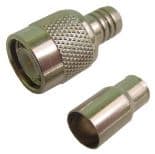
Male TNC connectors that combine BNC-size geometry with threaded coupling for improved retention in vibration-prone or outdoor RF applications. The correct part must match the complete transmission-line and mechanical interface, not merely the connector-family name.
Common applications include mobile radio, antennas, industrial wireless, instrumentation, transportation and outdoor communications. For replacement work, document both mating halves, the coax or board interface, mounting method and system impedance before selecting a substitute.
TNC is a threaded miniature coaxial connector that shares the general size class of BNC but uses screw coupling for greater resistance to vibration and accidental disengagement. It is commonly used in radio, antenna, transportation and industrial wireless equipment.
Select TNC by impedance, frequency, cable group and environmental needs. Threaded coupling can be advantageous outdoors or on moving equipment, but weather resistance depends on the actual product design. For cable connectors, use the specified preparation and termination tooling to preserve shielding and retention.
RP-TNC is a separate mating convention that reverses center-contact gender relative to standard TNC. It appears frequently in wireless applications. Determine shell gender and center-contact type separately before ordering replacements.
TNC uses a threaded coupling rather than the BNC bayonet. The thread resists accidental disengagement and is useful where vibration, motion or environmental exposure would make a quick bayonet less desirable.
TNC is available in standard and reverse-polarity forms and in multiple cable terminations. Verify center-contact gender, cable group, connector body gender and impedance. Similar-looking TNC and RP-TNC parts are not automatically compatible.
Threaded TNC interfaces should be started by hand to avoid cross-threading, then tightened according to the equipment or connector manufacturer guidance. Route the cable so vibration is not transferred directly into the connector body. In maintenance work, inspect the mating threads, center contact and dielectric for wear or contamination before assuming a new cable-side connector will correct an intermittent RF problem.
When replacing an existing RF connector, the safest cross-reference starts with the original manufacturer part number or a complete set of dimensions and electrical requirements. Similar-looking RF connectors can differ in impedance, contact geometry, cable fit, mounting threads, plating and frequency performance. If the original part number is unavailable, identify the mating connector, cable manufacturer and cable number, panel/board arrangement and application frequency before selecting an alternate.
For cable assemblies, consider whether replacing the complete assembly is more reliable than reterminating a damaged connector in the field. High-frequency performance depends heavily on assembly workmanship, and a factory-terminated cable can reduce uncertainty when tooling or inspection capability is limited.
What is the most important specification when choosing tnc plugs & male connectors? Start with the exact mating interface and system impedance, then verify cable or mounting compatibility, termination method and frequency. No single specification is enough by itself.
Can two RF connectors mate physically and still be the wrong combination? Yes. Impedance, reverse-polarity center contacts, cable fit and electrical performance can differ even where mechanical mating seems possible. Always verify the complete specification.
Does a connector family name guarantee a frequency or environmental rating? No. Ratings vary by individual design, cable and assembly. Use the manufacturer datasheet when frequency, sealing, power or return loss is critical.
If you are replacing an existing tnc plugs & male connectors or specifying a connector for a new RF, video or communications application, provide Wallco with the equipment interface, cable type, impedance, required frequency, mounting style and any environmental requirements. Those details make it much easier to narrow the correct connector and avoid an electrically or mechanically incompatible substitution.
