
Lux & Foot-Candle Meters are illuminance meters that measure visible light incident on a surface in lux or foot-candles. Choosing the right instrument requires more than matching a category name. Important considerations include measurement range, resolution, cosine correction, spectral response, sensor head design, averaging, min/max functions and lux/foot-candle unit selection. Wallco organizes this category to help technicians, engineers and maintenance teams compare products for workplace lighting surveys, schools, offices, warehouses, production areas, photography support, facility audits and verifying lighting upgrades.
Illuminance is different from the output rating of a lamp: a lux or foot-candle meter measures the light actually reaching the measurement plane. Review the individual product specifications, included probes or accessories, operating limits and manufacturer instructions before selecting an instrument for a specific test procedure.
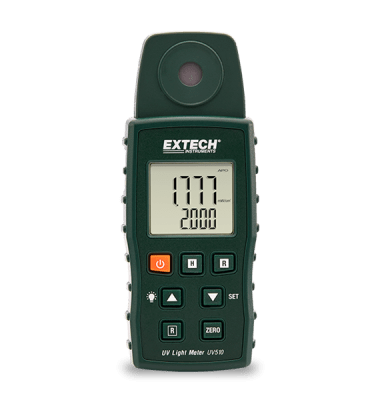
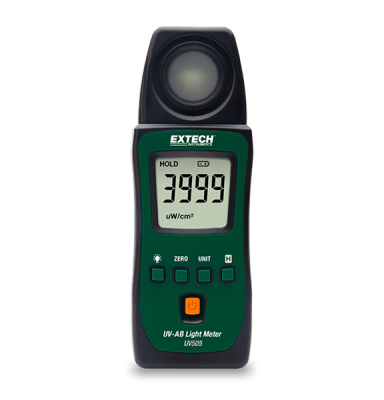


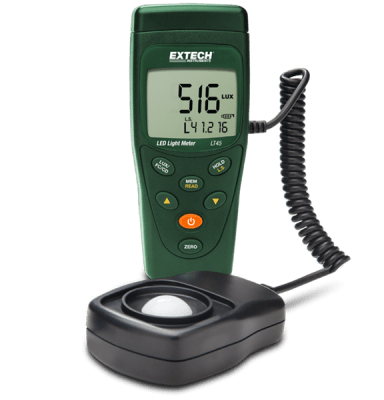
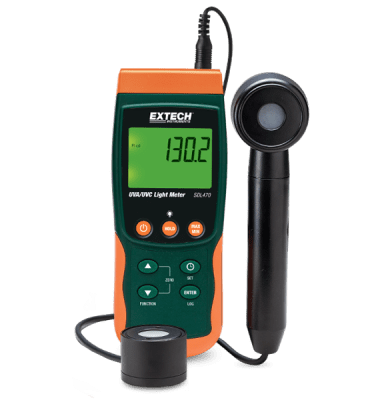

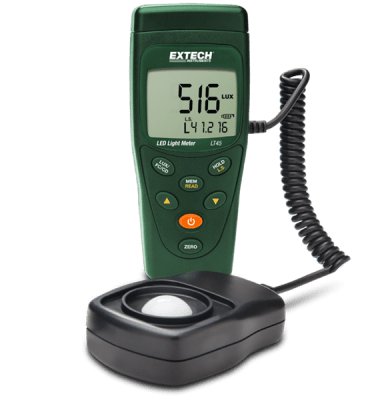

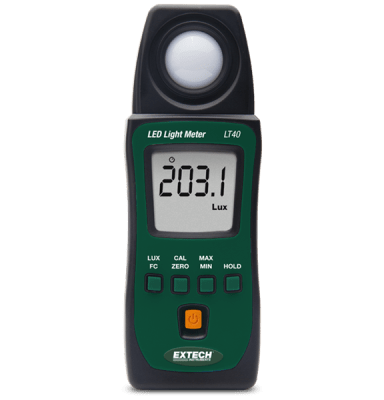

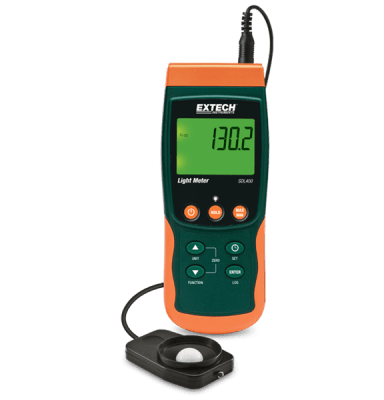
Illuminance meters that measure visible light incident on a surface in lux or foot-candles. In practice, the value of the instrument comes from matching the measurement principle to the question being asked. A tool that is excellent for a quick field check may not be the right choice for trending, commissioning or formal troubleshooting. Before comparing models, define the expected signal or environmental condition, the accuracy and resolution needed, the physical access available and whether the test will be made on energized equipment or operating machinery.
For lux & foot-candle meters, pay close attention to measurement range, resolution, cosine correction, spectral response, sensor head design, averaging, min/max functions and lux/foot-candle unit selection. Range alone is not enough. Resolution determines whether small changes are visible, while accuracy specifications indicate how closely the displayed result should represent the actual condition. Response time matters when the measured value changes quickly. Probe geometry, jaw size, sensor size or lead configuration can determine whether the instrument physically fits the application. If logging or documentation is required, also compare memory capacity, sample interval, communications and software support.
Lighting surveys should use consistent sensor position and orientation. For work-plane evaluation, place the sensor where the task is performed rather than simply measuring directly under a fixture.
These instruments are commonly used for workplace lighting surveys, schools, offices, warehouses, production areas, photography support, facility audits and verifying lighting upgrades. The best model depends on the job environment. A plant-maintenance technician may prioritize ruggedness, fast setup and repeatable measurements. A commissioning technician may need logging, min/max capture or software reports. A laboratory or engineering user may place greater weight on resolution, sensor response and traceable calibration. Matching the instrument to the workflow usually produces more useful results than simply choosing the model with the widest advertised range.
Illuminance is different from the output rating of a lamp: a lux or foot-candle meter measures the light actually reaching the measurement plane. Related instruments can overlap in features, but similar-looking tools may answer different questions. When two categories appear interchangeable, compare the underlying sensing method and the type of result produced. A presence detector, for example, is not the same as a numeric measuring instrument; a logger is not the same as an analyzer; and a screening tool is not necessarily appropriate for acceptance testing. Understanding that distinction helps avoid misleading readings and unnecessary purchases.
Measurement quality depends on both the instrument and the procedure. Use the proper range, allow the sensor to stabilize when required, position the probe or clamp correctly, and avoid conditions the manufacturer identifies as sources of error. Environmental factors such as temperature, humidity, electromagnetic fields, airflow turbulence, surface condition or material composition can affect certain measurements. For repeatable maintenance trending, use the same test location and procedure each time and record enough context to make future comparisons meaningful.
Always use test equipment within its published electrical, environmental and mechanical limits. For instruments used on energized circuits, verify the meter, probes and accessories are appropriately rated for the installation and procedure. Inspect leads, jaws, housings and sensors before use. For rotating machinery, hot surfaces, ultraviolet sources or other physical hazards, the measurement itself does not remove the underlying risk. Follow the equipment manufacturer's instructions and the site's approved safety practices rather than relying on a category description as a test procedure.
Start with the measurement you actually need, then narrow the products by range, accuracy, resolution and sensing method. Next consider access: conductor diameter, probe reach, sensor footprint, connector type, working distance or material depth can eliminate otherwise suitable instruments. Finally compare workflow features such as backlight, audible indication, hold, min/max, averaging, data logging, rechargeable power, removable memory or PC/mobile connectivity. Accessories can matter as much as the base instrument, especially when specialized probes, current sensors, reflective targets, contact wheels or calibration references are required.
A reading should be evaluated in context rather than treated as an isolated pass/fail number. Compare results with equipment specifications, baseline measurements, known-good circuits or materials, applicable procedures and historical trends. Unexpected values may result from the system being tested, but they can also come from poor probe placement, incorrect range, zero offset, induced signals, unstable environmental conditions, damaged leads or a measurement method that does not fit the application. Repeating the measurement under controlled conditions is often the fastest way to separate an actual problem from a test-method issue.
There is no single universal specification. Start with the measurement type and expected range, then compare accuracy, resolution, sensing method, physical access and the conditions in which the test will be performed. Specialized applications may make one of those factors much more important than the others.
Not necessarily. A wider range can be useful, but low-end resolution, accuracy and sensor suitability often matter more. Choose a range that comfortably includes the expected value without sacrificing the detail needed for the diagnosis.
Logging is valuable when conditions change over time or when the problem does not occur while the technician is watching the display. It is also useful for commissioning, energy studies, environmental monitoring and maintenance documentation.
Only when the measurement method, ratings and specifications support the intended test. Connector style, display format or general appearance does not establish equivalence. Confirm the actual sensing principle and operating limits before substituting one instrument for another.
If you are comparing instruments for a specific application, gather the expected measurement range, required accuracy, environment, physical access, test duration and any logging or reporting requirements. Wallco can use those details to help narrow the available products and identify the specifications that matter most for the job.