
Commercial loudspeaker assemblies designed to integrate with suspended acoustic ceiling grids, often as complete tile-sized or tile-replacement speaker systems.
Wallco organizes ceiling tile speakers within Speakers to help engineers, contractors, integrators, maintenance teams and buyers narrow the correct product by the technical and installation details that determine compatibility.
Typical applications include offices, schools, retail stores, healthcare facilities and corridors and distributed paging systems. Use the product listings below to compare available configurations, then use the detailed selection guide below the products to verify system, mounting and performance requirements before ordering.

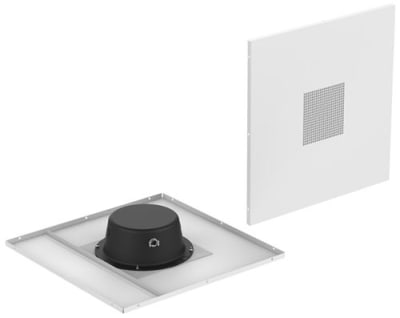


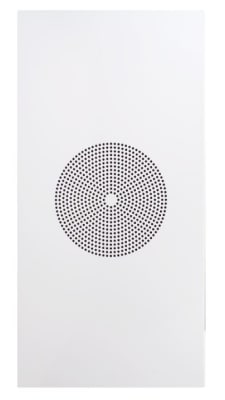


Commercial loudspeaker assemblies designed to integrate with suspended acoustic ceiling grids, often as complete tile-sized or tile-replacement speaker systems. Ceiling tile speakers are distinct from ordinary round in-ceiling speakers because the tile or panel itself is part of the mechanical installation and often affects coverage and aesthetics. Choosing the right product starts with the system architecture and the physical installation, not simply the category name. A replacement that looks similar can behave very differently when impedance, transformer taps, connector wiring, mounting geometry, control functions or environmental requirements do not match.
Wallco groups these products within Speakers so commercial installers, engineers, integrators, maintenance teams and purchasing departments can compare the relevant configurations while keeping adjacent audio categories separate. The guidance below is intended to help narrow the selection before checking the individual manufacturer data sheet for the final electrical, acoustic and mechanical specifications.
Tile speakers can simplify coverage by placing the radiating surface directly within the ceiling grid. In a complete installed-audio system, this product category interacts with amplifiers, loudspeakers, microphones, cabling, mounting hardware and system controls. That means the best part is the one that fits the entire signal and installation chain. For retrofit work, document the existing model, wiring, mounting arrangement and connected equipment before assuming a new part is a direct substitute.
Coverage depends on ceiling height, listener plane, loudspeaker dispersion and desired overlap. This is especially important in commercial audio because a system may have many devices on one circuit or many zones controlled from one rack. One incorrect load, tap, connector or control assumption can affect more than the individual device being replaced.
Treat this as a primary compatibility check. Verify the existing equipment label, project drawings or manufacturer documentation and do not rely on appearance alone. For ceiling tile speakers, record this requirement before comparing model numbers so products that cannot meet the installation are eliminated early.
Consider how this specification affects the rest of the system. A value that is acceptable for one room, zone or device may not be appropriate when several products share the same circuit or signal path. For ceiling tile speakers, record this requirement before comparing model numbers so products that cannot meet the installation are eliminated early.
Mechanical placement influences performance as well as installation labor. Confirm dimensions, clearances, aiming, support and access for future service. For ceiling tile speakers, record this requirement before comparing model numbers so products that cannot meet the installation are eliminated early.
Audio performance should be evaluated in the real application. Room acoustics, background noise, listening distance, source material and required intelligibility can change what is appropriate. For ceiling tile speakers, record this requirement before comparing model numbers so products that cannot meet the installation are eliminated early.
Commercial installations may impose requirements beyond basic audio performance, including environmental exposure, plenum spaces, security, continuous operation, code requirements or owner standards. For ceiling tile speakers, record this requirement before comparing model numbers so products that cannot meet the installation are eliminated early.
Common applications include offices, schools, retail stores, healthcare facilities and corridors and distributed paging systems. The same category can be used very differently across these environments. A quiet office, a reverberant warehouse and an outdoor hospitality space may require different coverage, level, weather resistance, mounting and control even when they use products with the same basic description.
During installation, confirm cable type and routing, strain relief, grounding where applicable, mounting support and service access. Keep signal and speaker wiring organized and labeled by zone or destination. For products mounted overhead or above occupied areas, follow the manufacturer instructions for brackets, safety restraints and structural attachment. Where building, fire, plenum, accessibility or electrical codes apply, the project requirements take precedence over generic product-selection guidance.
Some assemblies include integral backboxes or transformers while others require separate installation components. When replacing an existing product, compare the old and new data sheets side by side. Check voltage or impedance, rated power, connectors, dimensions, mounting pattern, environmental rating and any control or network functions. A manufacturer may keep a similar product name while changing details that matter in an installed system.
For new systems, work from the design outward: define zones and coverage, determine the signal path and amplifier topology, establish the wiring method, then select hardware that fits those requirements. This avoids the common mistake of selecting individual products first and later discovering that the pieces do not form a practical system.
Not safely based on appearance alone. Match the electrical or acoustic function, system interface, mounting requirements and manufacturer specifications. Similar housings often conceal important differences.
Start with the existing model number and manufacturer, then document ceiling-grid size and tile dimensions, speaker coverage and listening height, 70V/25V transformer taps or low-impedance operation, backbox/plenum requirements and tile support, seismic restraint and installation method. Photos of labels, connectors and mounting can also help during retrofit work.
No. Wattage is only one system parameter. Compatibility, coverage, impedance or line voltage, sensitivity, source/input requirements, mounting and environment can be equally important depending on the category.
Document the complete circuit or zone, not just one device. Verify the combined load, signal routing, cable distance, control requirements and physical placement before finalizing the part selection.
